
Last updated October 17, 2026
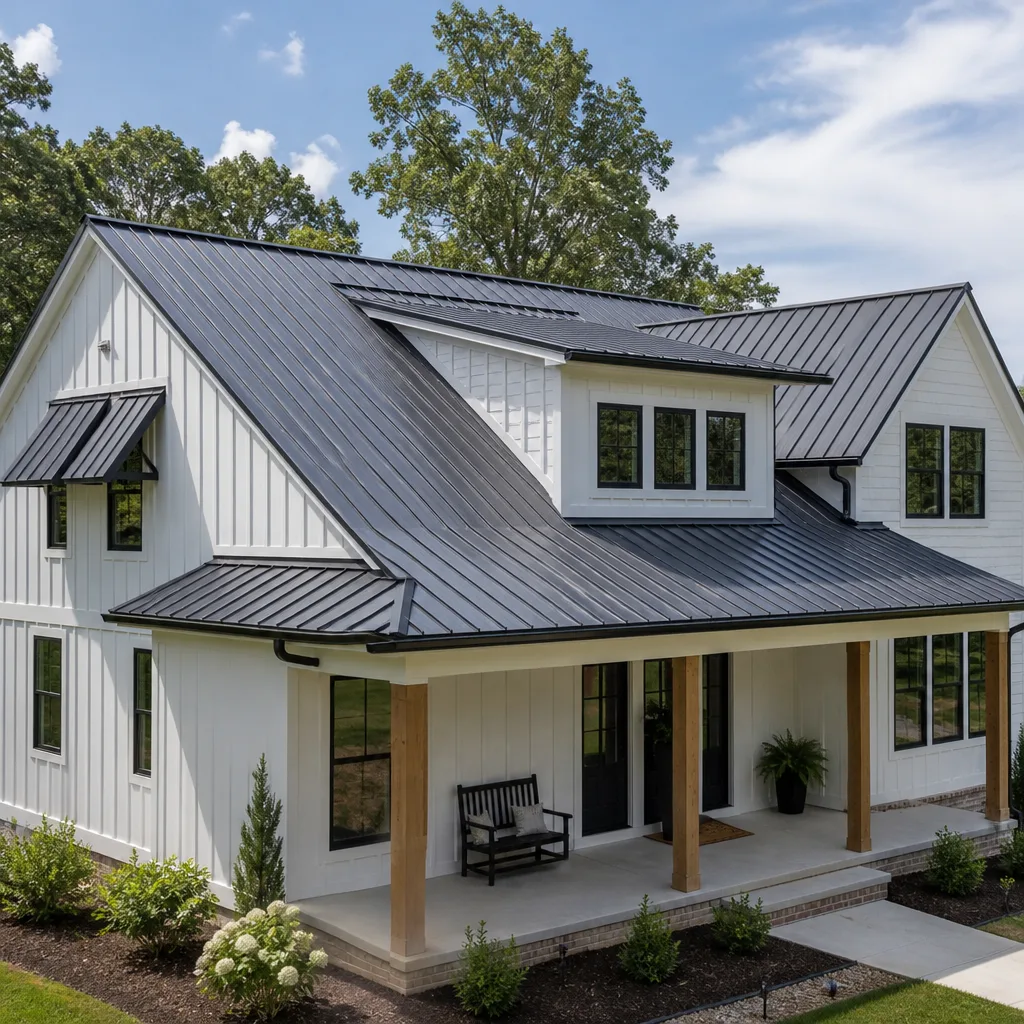 Metal roofing
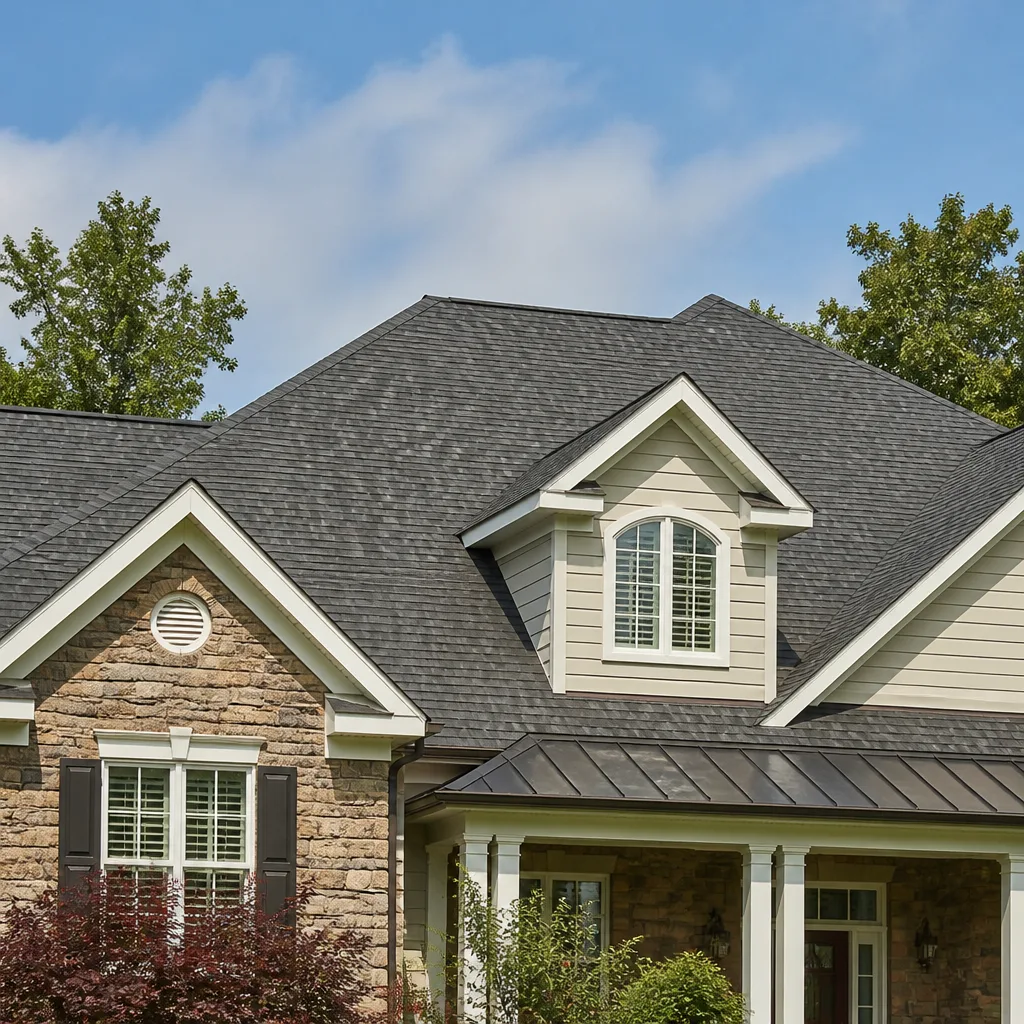 Architectural shingles
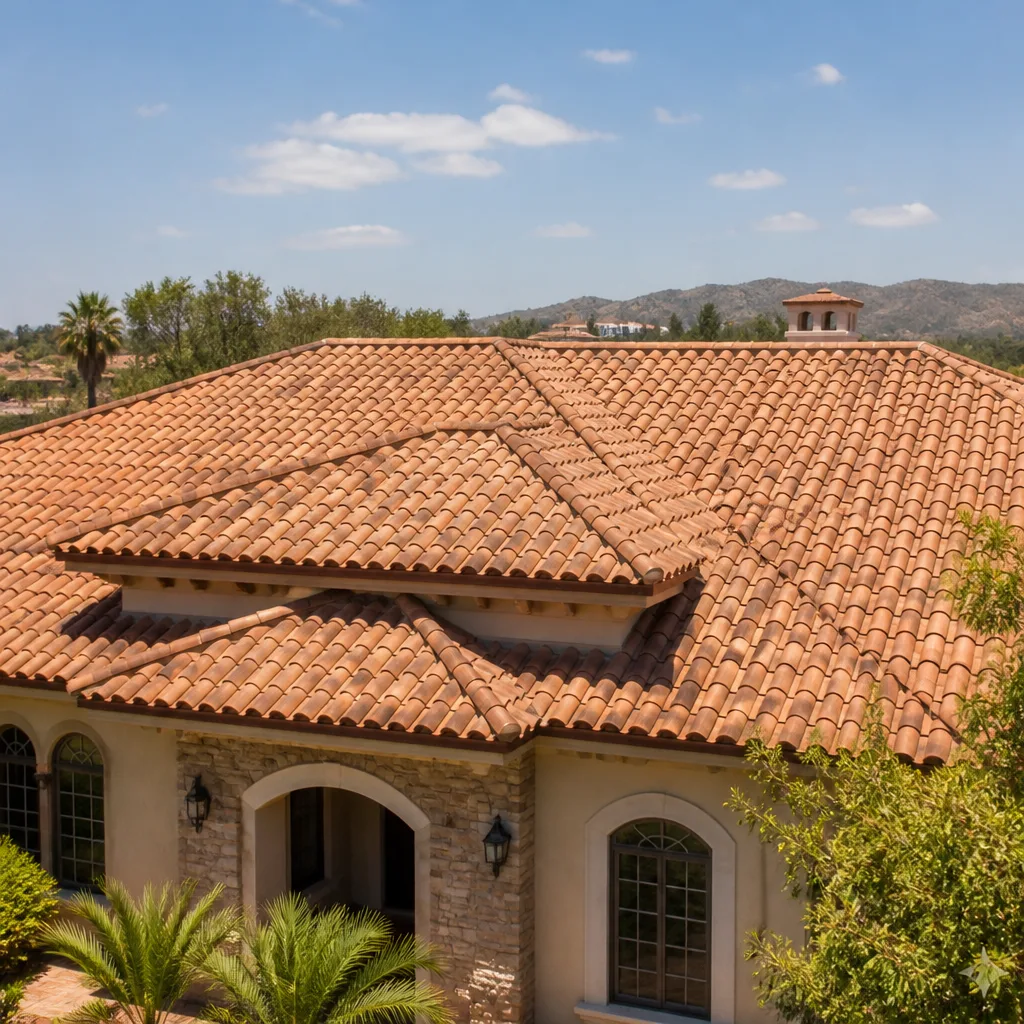 Tile roofing
 GAF
GAF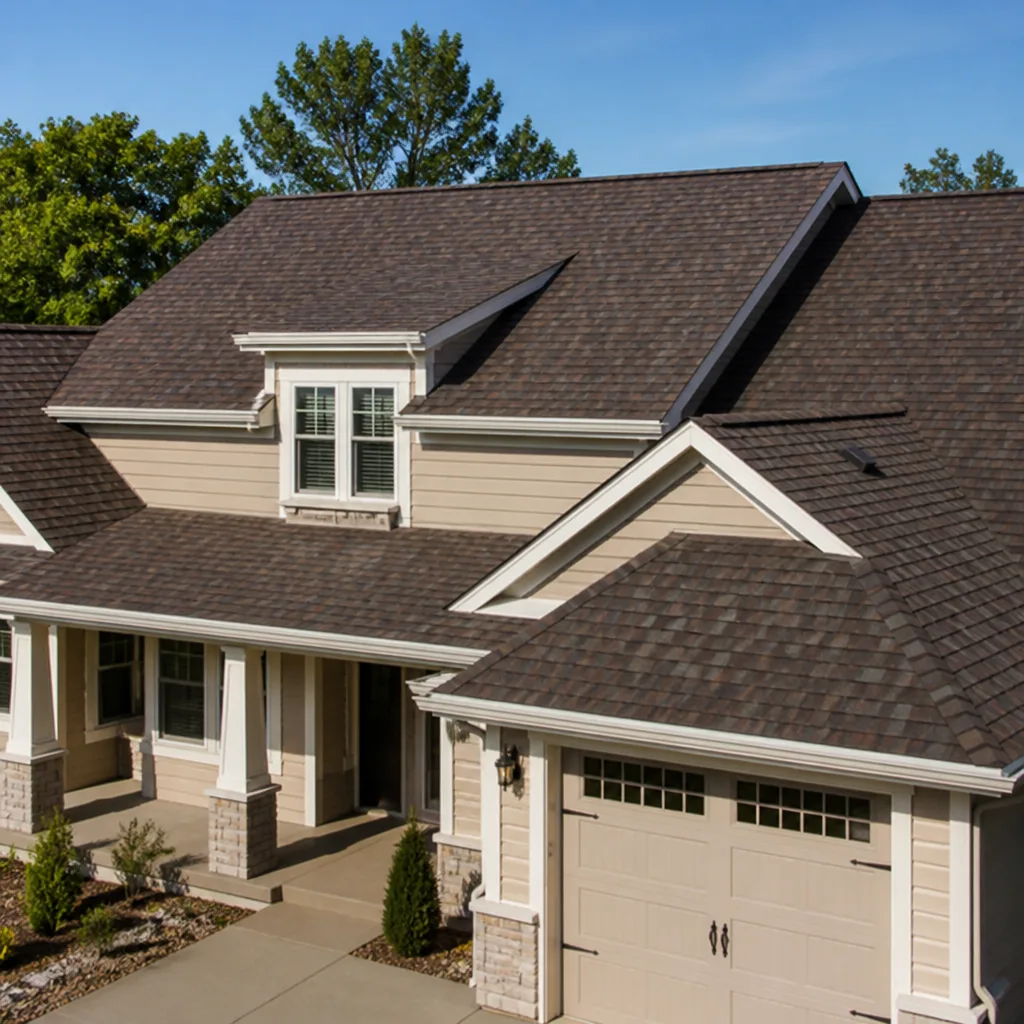 Owens Corning
 Flat & low-slope
Free roof inspection with deck photos before we talk money - GAF and Owens Corning certified installation
Roofing Company Maintenance Checklist for Fresno Homeowners
The most common source of a $4,000 – $8,000 Fresno roof repair isn’t storm damage. It’s a blocked valley drain or a failed pipe boot that a 20-minute annual walkthrough would have caught. Most roofing maintenance checklists online are written by marketing departments, not roofers. They’re generic, seasonally wrong for the Central Valley, and they skip the two or three inspection points that actually prevent expensive repairs on Fresno homes. This checklist is built from what we flag on real service calls across Fresno, Clovis, and the surrounding foothill communities. You’ll learn what to check, when to check it, what you can do safely from the ground, and what belongs in the hands of a licensed Roofing Company services professional.
Styles & brands we work with
Quick Answer
A proper Fresno roof maintenance checklist means checking four things twice a year: pipe boots and flashing for UV cracking, valley drains and gutters for blockage, ridge caps for wind lift, and attic ventilation before heat season. You do the ground-level checks yourself; a licensed roofer handles anything that requires walking the roof. In Fresno’s climate, the two critical windows are October (before the rainy season) and May (before the 100-degree stretch).
Table of Contents
- A Month-by-Month Roof Maintenance Calendar for Fresno
- Ground-Level Checks vs. Licensed-Roofer Work
- The Failure Points Fresno Roofers See Most Often
- How to Document Your Roof Year Over Year
- Questions to Ask Before You Accept a Free Roof Inspection
- Materials That Hold Up Better in Fresno Heat
- Common Mistakes to Avoid
- When to Call a Professional
- Frequently Asked Questions
- The Bottom Line
A Month-by-Month Roof Maintenance Calendar for Fresno
Fresno’s weather pattern is not like the Bay Area’s or the coast’s. We get maybe 12 inches of rain a year, and most of it arrives between November and March. Summer means 30 to 40 straight days above 100 degrees. Tule fog settles into the valley from December through February and sits on roofs for weeks. Each of these conditions creates a different kind of wear. A maintenance calendar that works in Seattle or Phoenix is wrong for Fresno. Here is what actually makes sense in this climate.
October: Pre-Rainy-Season Priority (the most important month)
- Clear valley drains and gutters. Fresno homes with tile or comp shingle roofs have valleys where two roof planes meet. Leaves from valley oaks and Chinese elms pile up in these channels. Once blocked, water backs up under the shingles and into the decking. This is the single most common cause of the $4,000 – $8,000 repair we opened with.
- Check pipe boots. The rubber boot around furnace flues, plumbing vents, and bathroom exhaust pipes cracks in Central Valley sun. We see boots fail on Fresno roofs in as little as six years. A failed boot lets water run straight down the pipe and into your ceiling. Replacements cost $150 – $400 installed, depending on access, if caught before the decking rots.
- Inspect flashing at penetrations. Chimneys, skylights, and roof-to-wall transitions rely on metal flashing to keep water out. Fresno’s summer-to-winter temperature swings cause thermal expansion and contraction that can break the sealant around flashing joints. Look for lifted edges or cracked caulk from the ground with binoculars.
- Trim overhanging branches. Anything touching the roof will scrape granules off shingles in the wind. Branches also drop leaves directly into the valleys you just cleaned.
November through February: Tule Fog and Rainy Season
- Check attic for condensation after fog events. Tule fog can sit for two weeks straight. If your attic ventilation is inadequate, that moisture condenses on the underside of the decking and slowly rots it. Look for dark stains on plywood sheathing or a musty smell.
- Watch interior ceilings after the first real rain. The first storm of the season is when slow leaks show themselves. Stains can take 24-48 hours to appear. Check ceilings around fireplaces, skylights, and the corners of rooms directly under valleys.
- Keep gutters clear through leaf drop. Fresno’s deciduous trees drop in November and December. If you cleaned in October, plan to check again in December unless you have gutter guards.
May: Pre-Heat-Season Checks
- Inspect the roof for lifted ridge caps. Spring winds in Fresno, especially those that come over the Coast Range, push against ridge caps from the northwest. We regularly see ridge cap shingles lifted on the leeward side of north-facing roof planes. Lifted ridge caps are the entry point for both water and the dry heat that bakes underlayment.
- Check attic ventilation before the 100-degree stretch. A Fresno attic can reach 140 degrees in July. That heat bakes shingles from below and transfers into your living space. Verify soffit vents aren’t blocked by insulation and that ridge vents or turbines spin freely. Adequate ventilation can extend shingle life by years in this climate.
- Look for curling shingles from the previous year’s heat. Once a shingle starts to curl, it’s near the end. Curled shingles tear off in wind and let water under the remaining field. If you’re seeing curl on a 15-year-old roof, start budgeting for replacement rather than waiting for failure. A roof replacement in Fresno typically runs $9,000 – $18,000 for an average 1,800 – 2,400 sq. ft. home, depending on material. A roof repair in Fresno for a small curling section runs $350 – $900.
July through September: Heat Monitoring Only
- Stay off the roof. Shingles in July are soft from heat and easily damaged by foot traffic. Tile is brittle when baked. Any roof work in the middle of a Fresno summer should be left to a professional who knows how to move on hot material without breaking it.
- Watch for wildlife activity. Summer is when raccoons and squirrels seek out cooler attic spaces. Chewed soffit vents or lifted flashing are invitations. Make repairs quickly, before nesting season.
Ground-Level Checks vs. Licensed-Roofer Work
One of the most honest things any roofing company in Fresno can tell you is which work belongs in your hands versus theirs. Walking a roof is genuinely dangerous. Falls from a one-story Fresno home account for serious injuries every year. This section is about knowing where the line is and not crossing it because you’re trying to save a service fee.
Safe to Do From the Ground (or an Attic)
- Binocular roof inspection. You can see pipe boots, ridge caps, missing shingles, lifted flashing, and blocked valleys from your front walk with a decent pair of binoculars. You don’t need to be on the roof to spot 80% of developing problems.
- Gutter cleaning on a single-story home. With a proper ladder and someone holding it, clearing gutters is manageable. Set the ladder on firm ground, never on the gutter itself.
- Attic ventilation check. Go into the attic on a cool morning and look for daylight at the soffit vents, condensed moisture on the decking, or blocked ridge vents.
- Interior ceiling inspection. After rain, check every room’s ceiling, especially under bathroom vents, around skylights, and in the corners where valleys drain.
- Photography. Document everything. We’ll cover this in the documentation section below.
Should Be Done by a Licensed Roofer
- Walking any roof surface. Tile roofs crack under untrained foot traffic. Comp shingle surfaces scuff and tear. Steep pitches are a fall hazard. The risk isn’t worth the inspection fee you’d save.
- Any repair involving sealing, nailing, or replacing materials. A DIY pipe boot replacement done wrong is a leak in the making. We see attempted homeowner fixes all the time where the repair is worse than the original failure.
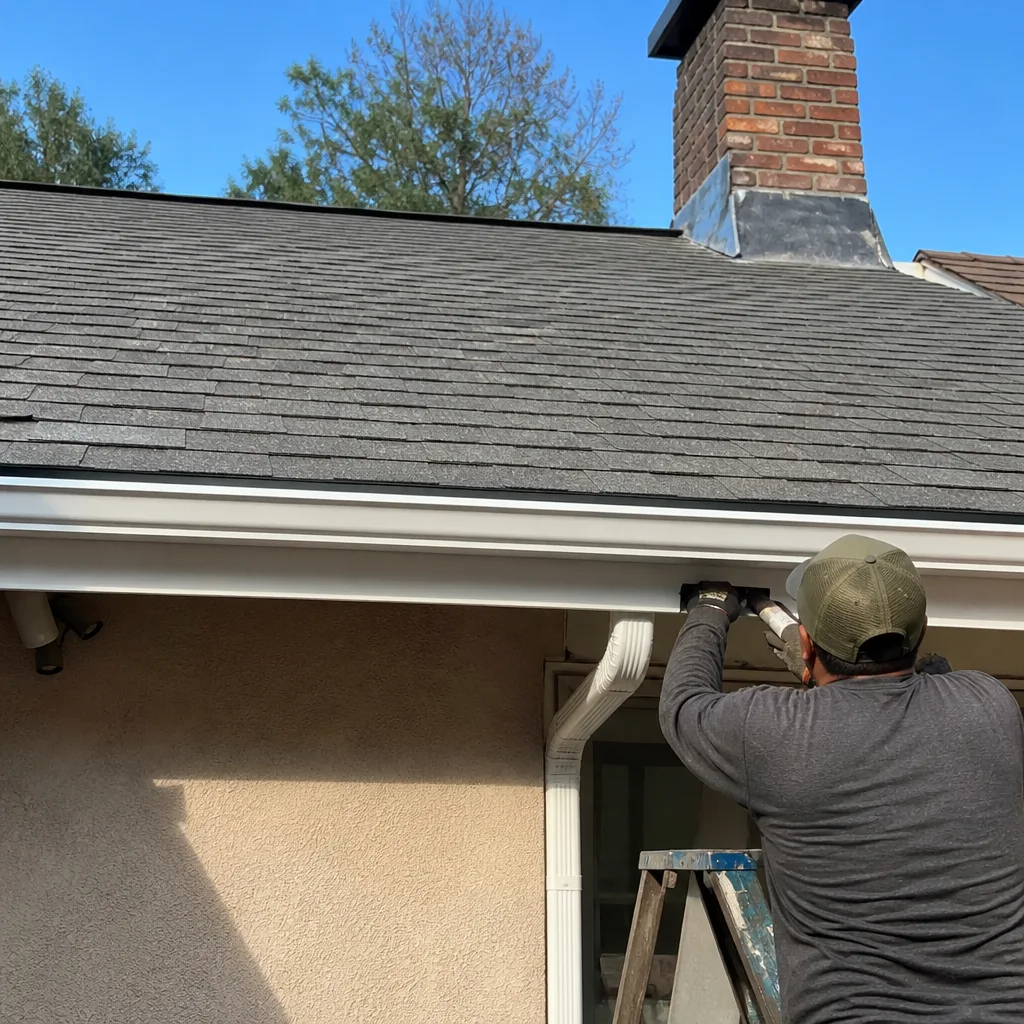
- Flashing work around chimneys, skylights, and walls. Flashing detail is the most technically demanding roof work there is. It requires correct lapping order, proper sealant, and knowledge of how water moves. Incorrect flashing is the leading cause of persistent, hard-to-find leaks on Fresno homes.
- Any attic inspection for mold or structural damage. If you find dark staining on decking, a professional should assess it. Mold in Fresno attics is often a ventilation failure, and the fix is structural, not just cosmetic.
At Brennan Roofing Co Fresno, our technicians are background-checked, uniformed, and dispatched on every call. You know exactly who is on your property, and every visit begins with a written price before any work starts. But the roof inspection in Fresno we perform is also something you can schedule as a standalone service, not just a response to a leak.
The Failure Points Fresno Roofers See Most Often
Every climate has its signature roof failure. In Fresno, it comes down to three things: UV radiation, dry heat, and wind direction. Here are the specific failure points we flag most often on service calls around Fresno, Clovis, Madera, and the foothill communities east of Highway 168.
1. Pipe Boots Cracked by UV
Fresno gets over 270 days of sunshine a year. That’s more UV exposure than most American cities. The rubber boot around a plumbing vent or furnace flue is only made to last five to ten years in direct sun. In Fresno’s intensity, we see boots cracked in as little as six. The failure mode is silent: a hairline crack forms on the south-facing side first, water enters during the next rain, and by the time you see the ceiling stain, the decking has been wet for weeks. Replacement cost ranges from $150 – $400. Reframing a rotted deck because the boot sat cracked for two seasons costs $800 – $2,500. This is the best argument on this page for a twice-yearly check.
2. Ridge Caps Lifted by Santa Ana-Direction Winds
Most Fresno ridge caps are installed with standard nails and sealant. Spring and fall wind events that come down the valley from the northwest hit ridge lines at an angle that works caps loose over time. Once a ridge cap lifts even an inch, dry air enters the ridge and accelerates drying of the underlayment beneath it. In the summer, that dried underlayment cracks. In the winter, the gap lets water in. We see lifted ridge caps on roughly one in four Fresno roofs older than 10 years. The fix is simple: reseal or replace the cap. Material cost is $3 – $8 per linear foot. The catch is that you have to be on the roof to do it, and that’s where a licensed roofer earns the service call.
3. Foam Underlayment Dried Out by Heat
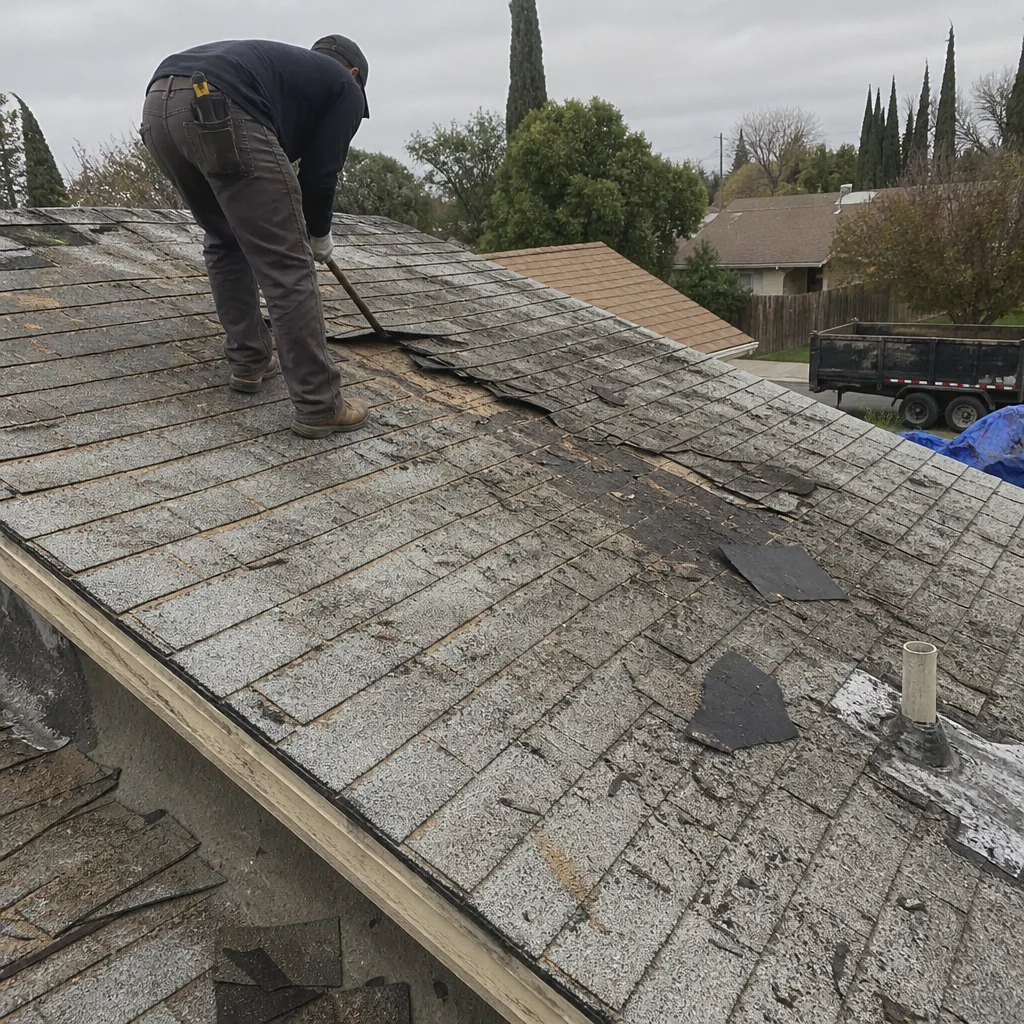
Fresno’s sustained summer heat doesn’t just affect shingles on top. It dries out the underlayment beneath. Asphalt-saturated felt underlayment installed 15 to 20 years ago is now at the point where it’s brittle and cracked across large sections of Fresno. When a shingle blows off, what remains is a dried, cracked felt that does not stop water the way it did when new. This is why a missing shingle on a 15-year-old Fresno roof is more urgent than it looks: the shingle is gone, but the underlayment beneath it may also be compromised. Synthetic underlayment, now standard in quality installations, holds up better and is what we install on every replacement.
4. Tile Roof Nails Backing Out
Fresno has a significant stock of tile roofs from the 1990s and 2000s. Tile itself handles heat well. The problem is the fasteners. Repeated thermal expansion and contraction causes the nails holding clay or concrete tile to work backward out of the batten. You’ll hear it as a rattle on windy days, or you’ll see a tile sliding out of position from the street. A single slipped tile left unaddressed lets water run onto the underlayment. When enough tiles slip, the underlayment becomes the primary roof surface, and it’s not designed for that. Retiling a section runs $8 – $15 per square foot depending on tile type and roof complexity.
5. Valleys Blocked by Valley Oak and Sycamore Debris
The valley’s namesake tree is also its roof’s biggest leaf problem. Valley oaks drop heavily in fall, and their leaves are large and leathery. They don’t break down quickly. Combined with sycamore bark and pine needles from older Fresno neighborhoods like the Tower District and Fig Garden, valley channels can fill within a month of the first drop. A blocked valley during a heavy January rain sends water laterally under shingles, saturating the decking along a path that can be four to six feet wide. The gutter and valley cleaning is free if you’re already up on a ladder. The decking replacement is not.
How to Document Your Roof Year Over Year
When an insurance claim becomes necessary, your documentation becomes your evidence. Adjusters look for maintenance records. Roofers look for change over time. Here is a documentation routine that takes 30 minutes twice a year and gives you a defensible record if a claim, sale, or warranty dispute ever comes up.
- Take dated photos from the same vantage points. Stand at the same four corners of your property and shoot the same roof faces every six months. Include close-ups of pipe boots, flashing, ridge caps, and valleys. A smartphone photo with a date stamp is sufficient. What matters is consistency of angle so change is visible.
- Script the inspection in writing. Note the date, weather conditions, and what you observed. “October 15, 2025 – clear and 72°F – valley above west bedroom has 3-inch leaf accumulation – pipe boot on furnace flue shows small crack on south face – no interior ceiling stains.” That’s a useful record. “Roof looks okay” is not.
- Keep invoices for every repair and inspection. If you have the roof cleaned, keep the receipt. If you replace a pipe boot, keep the invoice with the date and the address. This paperwork is the difference between an insurance adjuster treating you as a maintained homeowner versus a neglect case.
- Track the age of your roof and its components. Write down the install date of the roof, the type of shingle and underlayment, and the brand if you know it. If the previous owner didn’t leave that information, a roofing professional can often identify the material and approximate the age during an inspection.
- Document repairs with before, during, and after photos. If a roofer fixes a section, have them show you what was wrong and photograph it. At Brennan Roofing, we walk homeowners through exactly what we found on the roof, what we did, and what it looked like afterward. Every job ends with a written guarantee under the 365-Day Done Right Promise, and the documentation belongs in your file, not just ours.
Year-over-year documentation also helps you make the replacement decision on your timeline, not the roof’s. When you can see curling spreading across the south slope in your photos over three years, you know a replacement is in your future. You can budget for it. Homeowners who document don’t get surprised.
Questions to Ask Before You Accept a Free Roof Inspection
“Free roof inspection” is the most common lead-generation offer in this industry, and not every one of them is a real assessment. Some are sales calls in disguise: a technician spends 20 minutes on the roof, finds “significant damage,” and hands you a quote for replacement whether or not the roof actually needs it. Here’s how to tell the difference between a genuine inspection and a pitch.
- “Will you show me the specific areas you’re flagging?” A real roofer can show you photos or bring you to a vantage point and point to the exact issue. A salesperson waves generally or uses dramatic language without specifics. If the inspector won’t walk you through what they found, treat the “findings” as unverified.
- “Do you write up a condition report, or just a quote?” An inspection should produce a written condition document: what’s serviceable, what needs monitoring, what needs repair now. If the only output is a replacement estimate, the inspection was a formality for the sale.
- “What repair options do I have?” An honest assessment includes the small fix as an option. If a small area of damaged shingles is presented only as a reason to replace the whole roof, something is off. Roof replacement in Fresno is sometimes the right call, but it should be justified, not assumed.
- “Are you licensed and insured for roofing, specifically?” In California, a C-39 roofing contractor license is required for roof work above a certain dollar amount. Ask to see the license number. Verify it with CSLB. Anyone who hesitates is not a roofer you want on your property.
- “What does your guarantee actually say?” Ask for the guarantee in writing. At Brennan Roofing Co Fresno, the 365-Day Done Right Promise is exactly that: every repair and installation is guaranteed in writing for one full year. If the repair or installation fails within that period, we come back at no charge. That’s the standard. If a company can’t put their guarantee on paper, it’s not a guarantee.
- “Will the price change after the inspection?” If the answer is anything other than a clear “no,” walk away. Under The Garrison Standard, the price goes on paper before any work starts, and it does not move at the door. No change orders, no “we discovered more damage once we got up there” revisions. A straightforward roofer prices the job correctly the first time.
Materials That Hold Up Better in Fresno Heat
If you’re maintaining a roof with an eye toward eventual replacement, material choice matters in this climate. Fresno’s combination of extreme UV, long heat stretches, and occasional heavy rain narrows the field of what actually performs. We install from multiple manufacturer lines, including GAF and CertainTeed, so we’re not tied to recommending one product over another. Here’s what holds up and what doesn’t in the Central Valley.
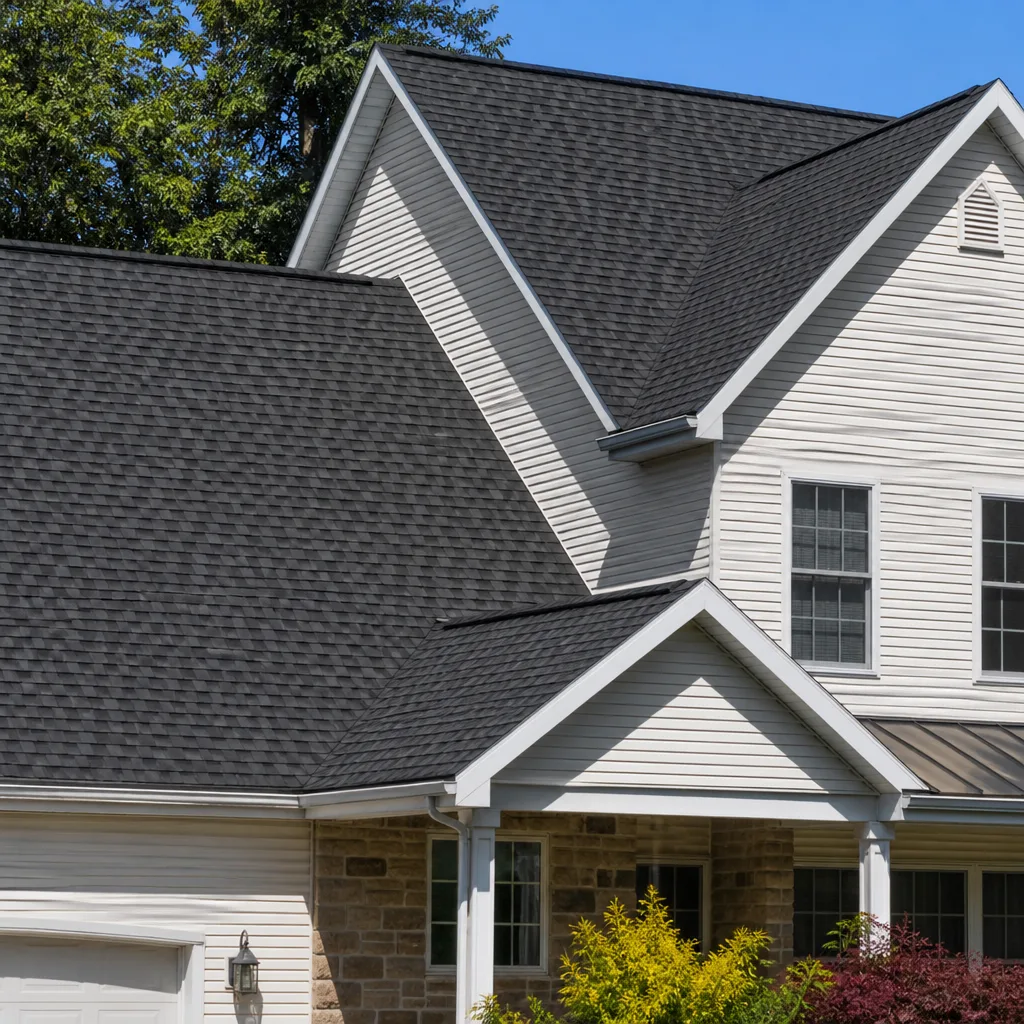
Asphalt Composition Shingles
Standard three-tab shingles are the least expensive and the least suited to Fresno’s UV intensity. Expect 15 – 20 years at most. Architectural shingles, which are thicker and laminated, hold up noticeably better and now dominate the Fresno replacement market. They carry higher wind ratings and resist the UV degradation that turns old three-tabs brittle. Architectural shingles from GAF and CertainTeed are our most common installations, and they typically carry 30-year to limited-lifetime manufacturer warranties.
Concrete and Clay Tile
Tile is excellent in Fresno heat. It doesn’t absorb heat the way asphalt does, it doesn’t degrade from UV, and it lasts 40 to 50 years when installed correctly. The weak points are the underlayment and the fasteners, as covered above. When we replace tile roofs in Fresno, we always replace the underlayment at the same time, rather than trying to reuse a 25-year-old felt.
Metal Roofing
Standing seam metal has gained share in Fresno and the foothill communities east of the valley. It reflects heat, handles the dry climate easily, and lasts 40+ years. The higher upfront cost, typically 1.5 to 2 times a quality architectural shingle roof, is the tradeoff. Metal also handles the occasional heavy Sierra-fed storm better than shingles when valleys and flashing are detailed correctly.
Underlayment: Synthetic vs. Felt
If there’s one material choice that matters most in Fresno, it’s switching from asphalt-saturated felt to synthetic underlayment. Synthetic holds up to heat without drying and cracking. It’s more expensive per square foot, roughly $0.20 – $0.35 per sq. ft. more than felt, but on a 2,000 sq. ft. roof that’s a difference measured in the hundreds of dollars, not thousands. Given that underlayment is the second line of defense after shingles, and that Fresno’s heat destroys felt in 15 years, the upgrade is almost always worth it.
Common Mistakes to Avoid
- Cleaning the roof with a pressure washer. Pressure washing removes granules from shingles and forces water under laps and flashing. It shortens the life of the roof. Use a leaf blower from the ground or have a professional handle accumulated debris. This is one of the most common destructive mistakes we see on Fresno homes.
- Walking on the roof “just to take a look.” Every step on a comp shingle scuffs granules. Every step on tile risks cracking. The ground-level binocular check catches most issues with zero risk to you or your roof.
- Sealing a leak from the inside. Spray foam or caulk on the interior side of a roof leak traps water in the decking and framing. The water keeps coming from outside and now it has nowhere to go. It rots the structure faster. Roof leaks must be stopped at the source, on the roof surface.
- Ignoring small leaks because “it only happens in heavy rain.” Fresno gets most of its rain in a handful of storm days. A leak that only appears during a heavy storm is still a leak. It’s actively damaging the decking every time it rains. The repair cost only goes up.
- Putting off gutter cleaning until visible overflow. By the time water spills over the gutter lip, the damage is already happening: fascia rot, soffit saturation, and water running down the exterior wall. Clean before the visible symptom shows.
- Hiring the lowest bid on a repair and not asking about guarantee terms. A $250 repair that fails in three months costs more than a $400 repair guaranteed in writing for a year. When comparing quotes, compare the guarantee language, not just the number. The Garrison Standard exists because too many Fresno homeowners have paid twice for the same repair.
- Skipping the attic check entirely. The attic tells you more about roof health than the outside does. Dark decking, condensation, daylight through the ridge, and insulation blocking vents are all visible only from inside. Skip the attic and you miss the early warnings.
When to Call a Professional
If you see water stains on a ceiling, call a roofer the same day. Water staining means the leak has penetrated the roof deck and is actively moving into your living space. The repair cost increases every week it goes unaddressed. If you see multiple cracked or missing shingles after a wind event, have it assessed before the next rain. If your roof is over 15 years old and you’ve never had a professional condition assessment, schedule one as a baseline. And if you’re uncomfortable on a ladder or have a two-story home, the ground-level inspection only gets you so far. Brennan Roofing Co Fresno offers free estimates throughout Fresno, Clovis, and the surrounding communities. Call (559) 785-2160 to schedule yours. The price goes on paper before any work starts, and every job is backed by the 365-Day Done Right Promise: in writing, for one full year, with a free return visit at no charge if it fails.
Frequently Asked Questions
Twice a year is right for Fresno’s climate: once in October before the rainy season and once in May before the heat stretch. A professional inspection at least every other year provides a baseline a homeowner can compare against their own checks. Call (559) 785-2160 to schedule an inspection with Brennan Roofing Co Fresno, and we’ll give you a written condition report.
A roof inspection in Fresno typically runs $150 – $400 depending on roof size, complexity, and access. Minor repairs identified during the inspection, like a pipe boot replacement or small flashing reseal, add $150 – $900 depending on what’s found. At Brennan Roofing, the price for any repair we propose is written down before work starts, so there’s no surprise at the end of the visit.
A two-story home changes the risk equation on any ladder work. Gutters at second-story height should be handled by a professional with a proper ladder setup and fall protection. For single-story homes, gutter cleaning is manageable with a spotter and proper ladder placement. But valley cleaning on any roof pitch is best left to a roofer who knows where to step.
A failed pipe boot looks like a cracked or missing rubber collar around the pipe where it exits the roof. With binoculars, you’ll see splitting on the south-facing side first, where Fresno’s sun hits hardest. Sometimes the boot will appear chalky white or gray before visible cracks appear. If you see any cracking, schedule replacement before the next rain. The fix is quick and inexpensive relative to the ceiling and decking damage it prevents.
Architectural asphalt shingles in Fresno last 18 – 25 years, which is shorter than the 25 – 35 years they might reach in milder climates. The UV and heat degrade shingles faster here. Tile roofs last 40 – 50 years with proper underlayment replacement at the halfway point. The biggest variable is ventilation: a Fresno home with adequate attic ventilation extends shingle life noticeably compared to one with a hot, sealed attic.
Yes. Brennan Roofing Co Fresno handles roof installation and replacement, roof repair, and roof inspection across the Fresno area. We install materials from manufacturer lines including GAF, CertainTeed, Owens Corning, and Boral, and every job begins with a written price before any work starts. Call (559) 785-2160 and a live person answers, 24/7, no voicemail, no automated system.
The Bottom Line
Roof maintenance in Fresno is a twice-a-year habit: October and May. The October pass is about water, the May pass is about heat. The failures that cost Fresno homeowners thousands are the unglamorous ones – cracked pipe boots, blocked valleys, lifted ridge caps, dried underlayment. None of them announce themselves dramatically. All of them are visible early if you look. Do the ground-level checks, document what you find, and call a licensed roofer for anything that requires setting foot on the roof. Explore our more guides & resources for year-round roof care. The goal isn’t to make your roof last forever. It’s to make sure you replace it on your schedule, not the roof’s. And when the time comes, get a written price before any work starts. That’s the standard every Fresno homeowner should demand.
Written by Travis Oakley, Owner at Brennan Roofing Co Fresno, serving Fresno since 2000.
See the difference
 Before
 After
After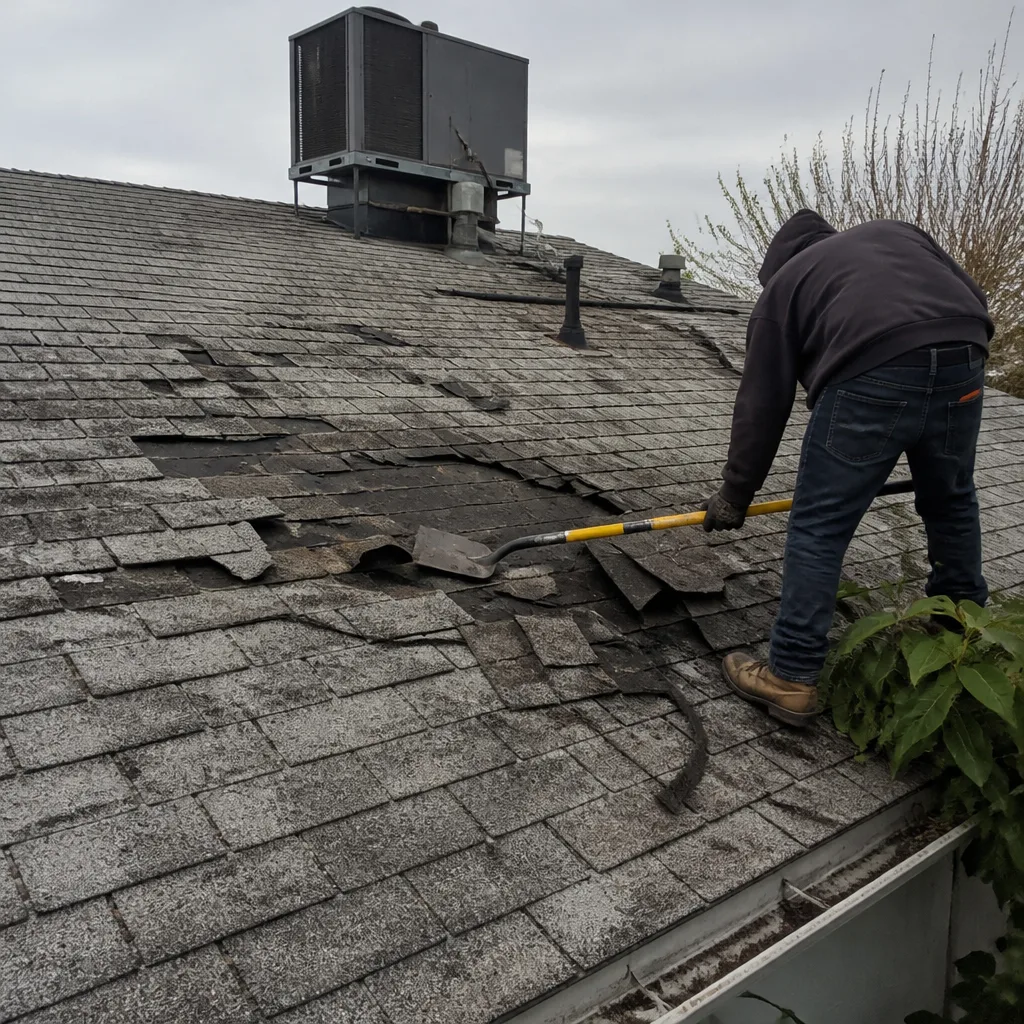 Before
 After
After Before
 After
After