
Last updated October 17, 2026
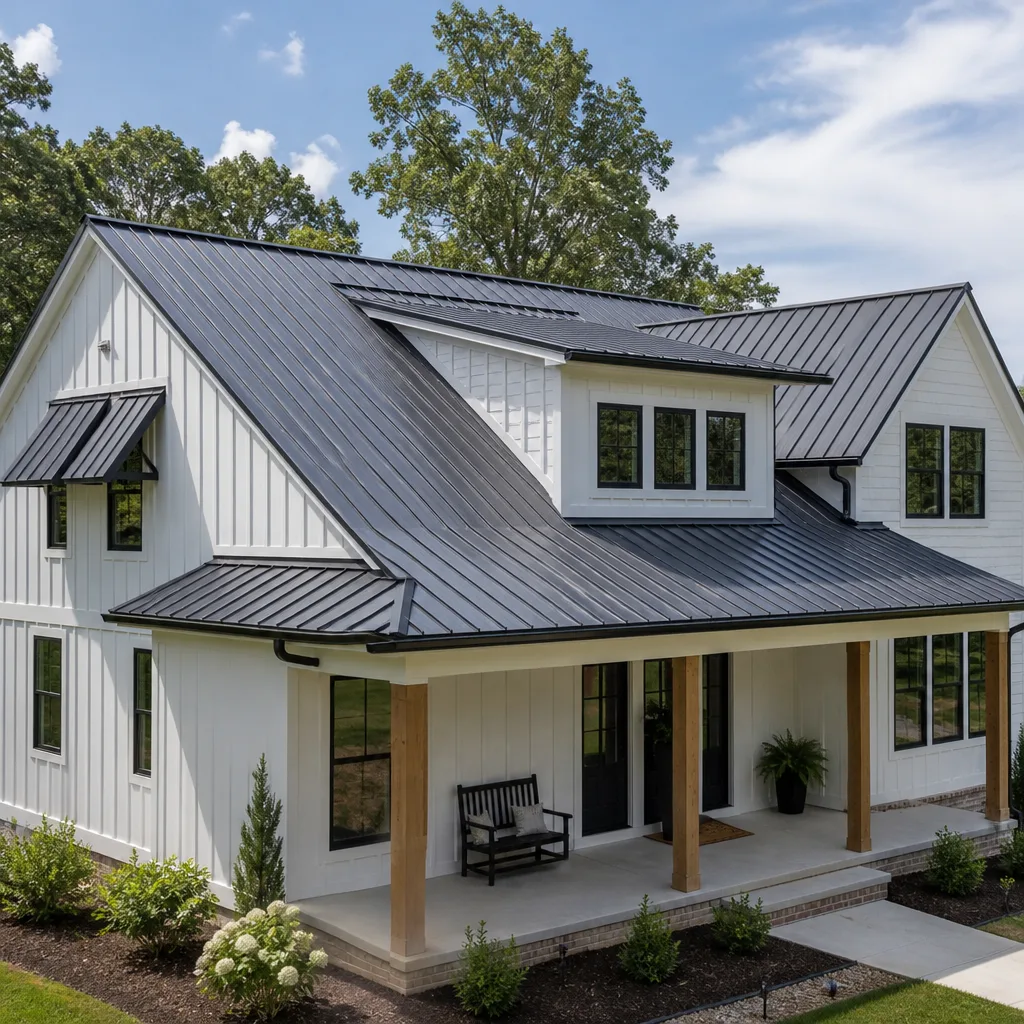 Metal roofing
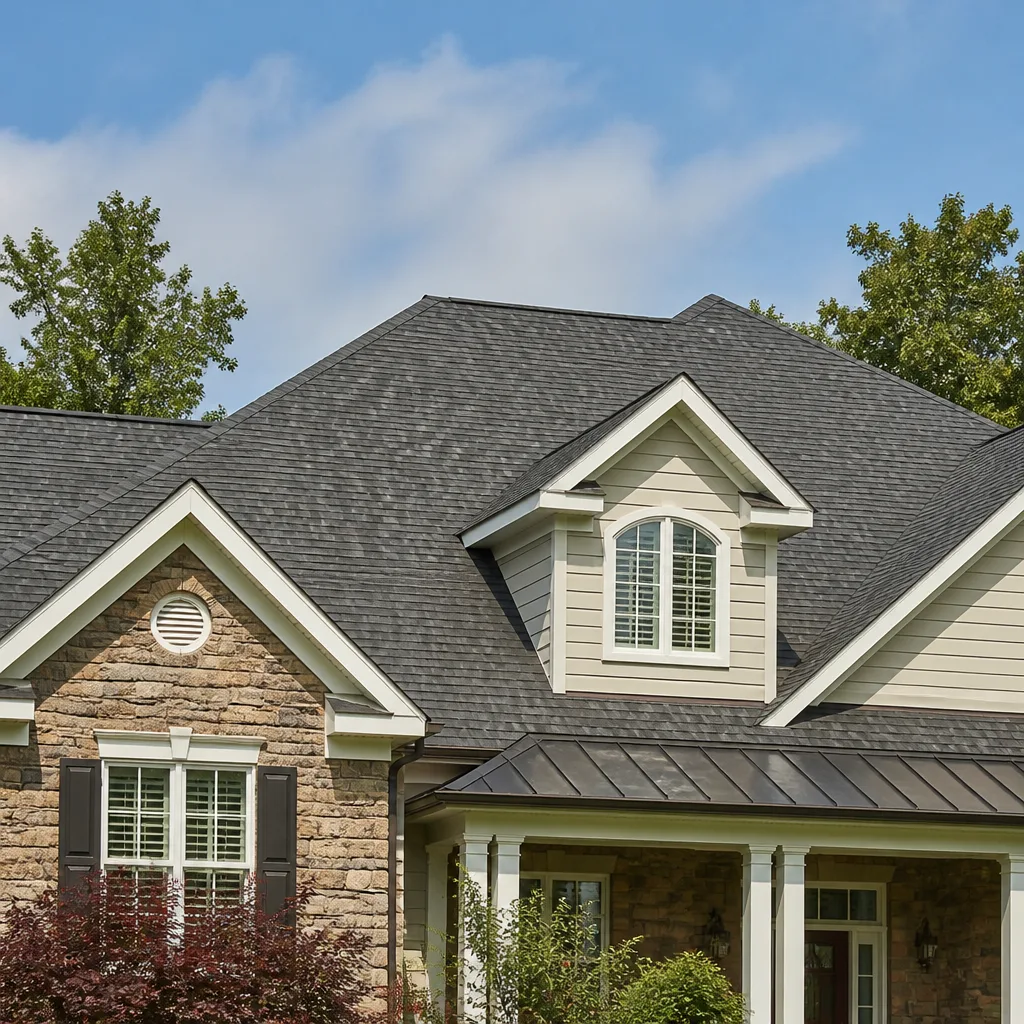 Architectural shingles
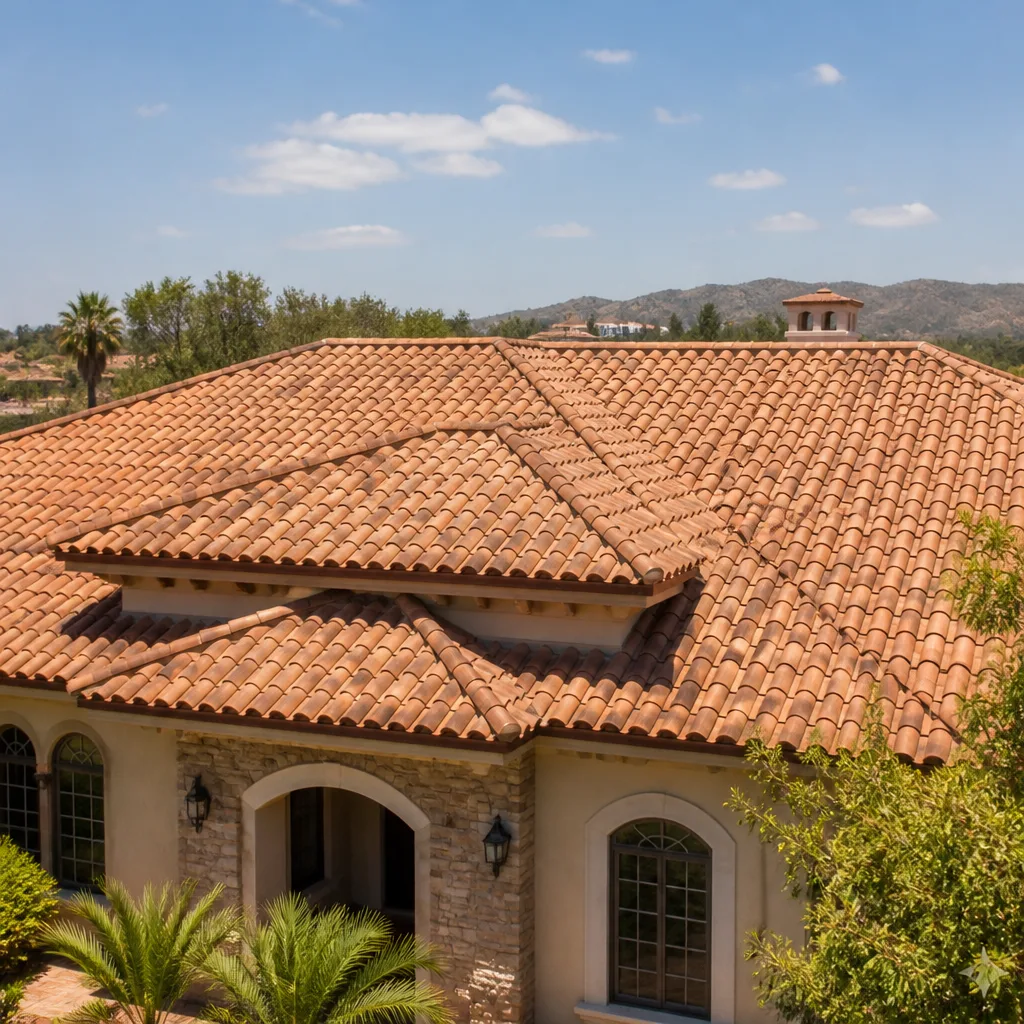 Tile roofing
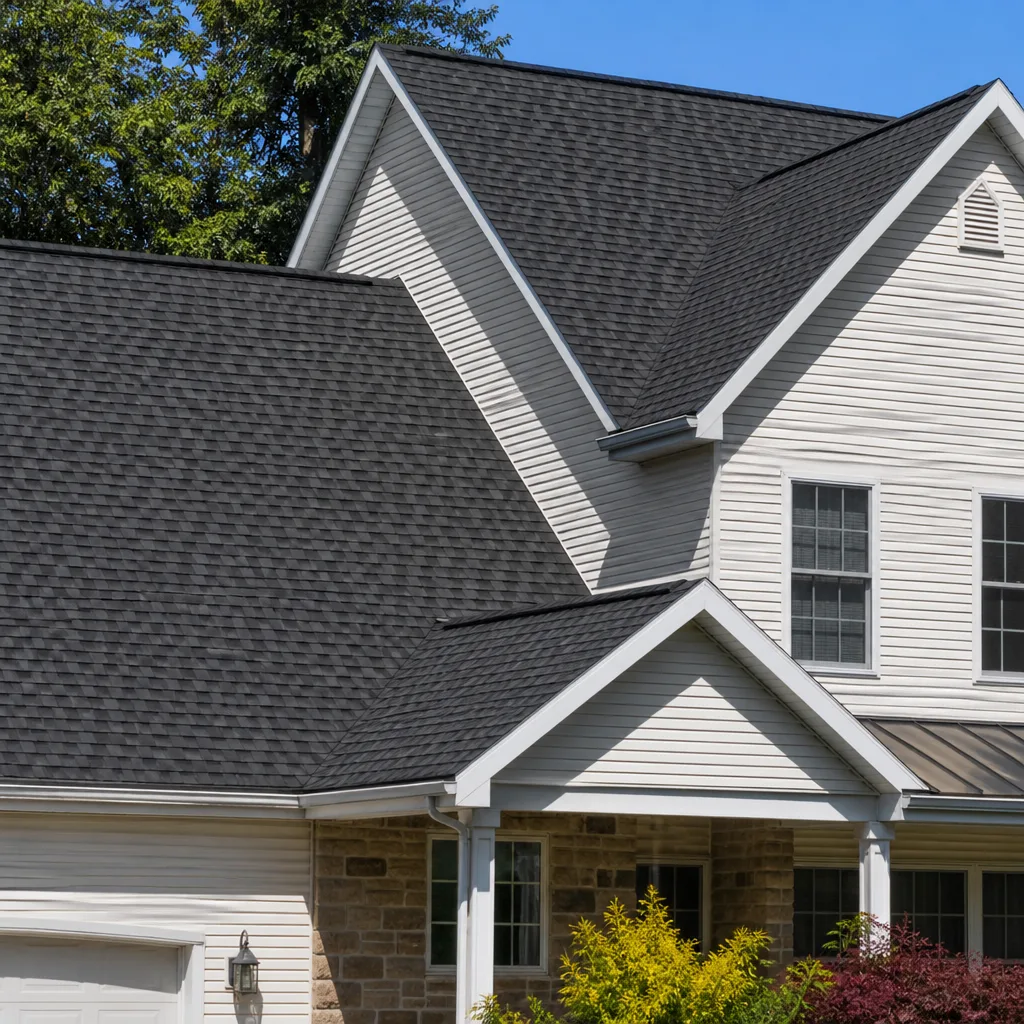 GAF
GAF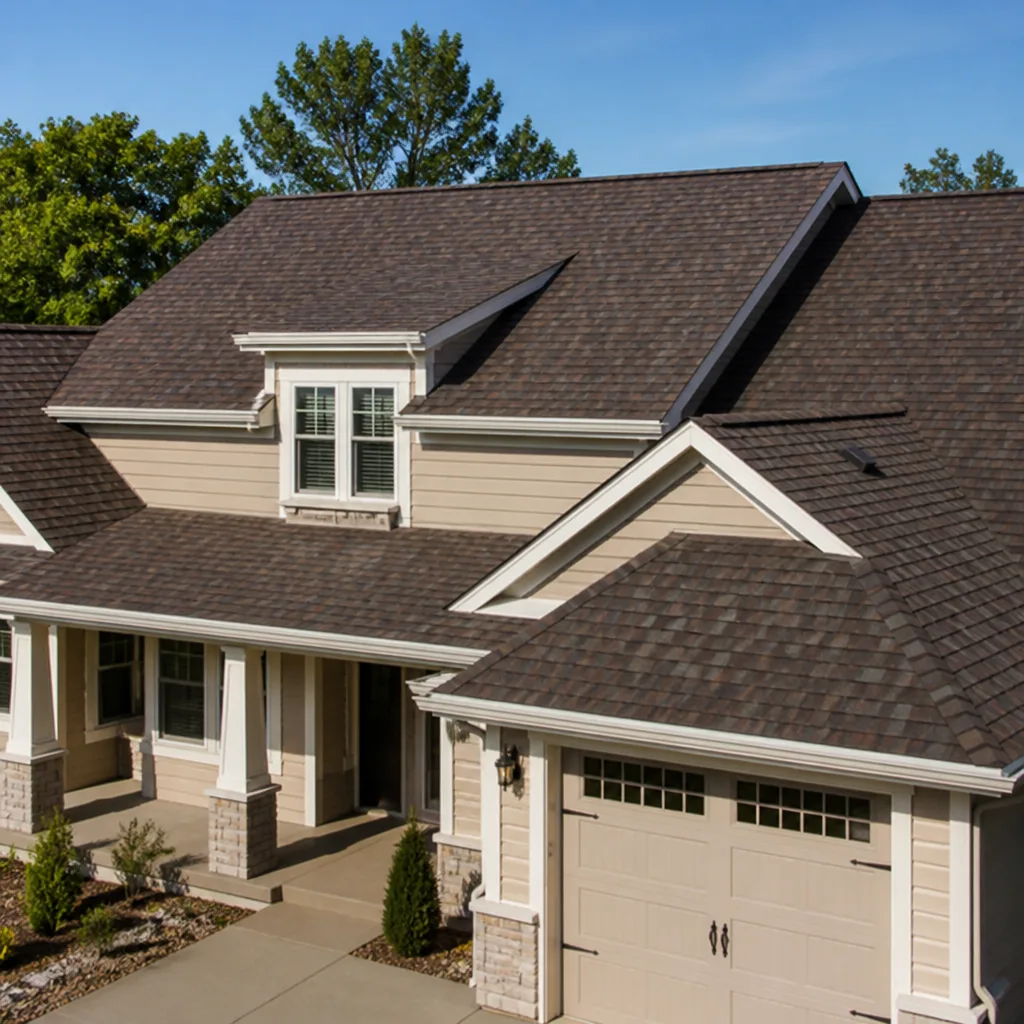 Owens Corning
 Flat & low-slope
Free roof inspection with deck photos before we talk money - GAF and Owens Corning certified installation
The Complete Guide to Roofing in Fresno
Fresno sits in a climate that punishes roofs in ways most national guides never mention. The San Joaquin Valley’s UV index ranks among the highest in the continental United States, yet most roofing advice written for Fresno homeowners recycles guidance written for Seattle drizzle or Atlanta humidity. That advice fails here. A roof that performs beautifully in Portland can cook, crack, and fail a decade early under Fresno’s July sun. This guide maps every major roofing decision, from material selection to reading an estimate, to the actual conditions your roof faces: 100°F-plus summers, tule fog moisture cycles, thermal shock between hot days and cold nights, and the occasional hail cell rolling off the Sierra foothills. For more guides & resources on protecting your home, explore our blog. We’re Brennan Roofing Co Fresno, and we’ve worked on enough Valley roofs to know what holds up and what doesn’t.
Styles & brands we work with
Quick Answer
A complete roof replacement in Fresno typically costs between $8,500 and $22,000 depending on material, roof size, and decking condition, while targeted repairs run $350 to $1,400. In this climate, asphalt shingles with a high solar reflectance rating, standing seam metal, and concrete tile are the most practical choices. The single most important decision you’ll make is not the shingle brand but whether the roofing company installs to a written standard that accounts for Fresno’s thermal cycling, because that’s what separates a roof that passes inspection from one that lasts 25 years. Our Roofing Company Maintenance Checklist for Fresno Homeowners covers what that standard should include.
Table of Contents
- How Fresno’s Climate Actually Affects Your Roof
- Best Roofing Materials for Fresno’s Heat
- What Roofing Costs in Fresno: Real Numbers
- How to Read a Fresno Roofing Estimate Line by Line
- Passing Inspection vs. Lasting 25 Years
- Ventilation: The Fresno-Specific Detail Most Roofers Skip
- Permits and Code Requirements in Fresno
- Common Mistakes to Avoid
- When to Call a Professional
- Frequently Asked Questions
- The Bottom Line
How Fresno’s Climate Actually Affects Your Roof
Fresno gets roughly 270 sunny days per year. That sounds pleasant until you understand what sustained ultraviolet exposure does to roofing materials. UV radiation breaks down the chemical bonds in asphalt shingles over time, causing granule loss, cracking, and brittleness. A shingle rated for 30 years by the manufacturer under laboratory conditions can look tired after 18 to 22 years in Fresno, simply because the UV dosage here is that much higher. This is not a defect in the shingle. It’s the environment.
The second stressor is thermal cycling. Fresno swings from 40-degree winter mornings with tule fog moisture to 105-degree July afternoons. That’s a 60-plus degree daily temperature range at certain times of year. Roof decking and shingles expand when hot, contract when cold, and absorb moisture from fog that then evaporates under sun. Over thousands of cycles, this movement loosens nails, opens seams, and accelerates wear at flashing points, pipe boots, and valleys. In our experience, the most common roof failure point in Fresno is not the field shingles but the flashing details around chimneys, vents, and skylights, because those spots experience the most movement and the most concentrated expansion stress.
Then there’s hail, which is less frequent in Fresno than in the Midwest, but does occur, particularly in spring storm cells that develop over the Valley. Hail damage here typically shows up as soft bruising on shingle surfaces rather than dramatic punctures. A bruised shingle loses granules faster after impact, which shortens its life even if the initial damage looks cosmetic. If you’ve had hail in your neighborhood, an inspection is warranted even if there are no visible leaks.
Best Roofing Materials for Fresno’s Heat
The right roofing material for Fresno is one that reflects solar heat, tolerates thermal movement, and resists UV degradation. Here’s how the main options stack up against Valley conditions.
Asphalt Architectural Shingles
Architectural shingles remain the most common roofing material in Fresno for a reason: they offer a strong balance of cost, durability, and installation simplicity. Not all shingles are equal in this climate. Look for shingles with a high solar reflectance index, often marketed as “cool roof” shingles from manufacturers like GAF, CertainTeed, and Owens Corning. We install GAF and CertainTeed products regularly, and the cool-roof rated versions measurably reduce attic temperatures, which lowers air conditioning loads and slows the aging of the shingle itself. Expect a service life of 20 to 25 years in Fresno with proper ventilation.
Concrete Tile
Concrete tile is extremely popular in newer Fresno subdivisions from Clovis to Madera Ranchos, and for good reason. Tile reflects solar energy, has real thermal mass, and lasts 40 to 50 years in this climate when installed correctly. The catch is weight: concrete tile requires a roof structure designed to support it. If your home was framed for composition shingles, a tile retrofit typically requires structural reinforcement, which adds cost. Tile also requires careful handling during installation and repairs, because cracked tiles are easier to cause than most homeowners expect. We include tile in our material options and will tell you plainly whether your roof structure can support it before we ever give you a price.
Standing Seam Metal
Standing seam metal is the best-performing material for Fresno’s conditions: it reflects solar heat better than any shingle, expands and contracts without cracking, and sheds rain and debris easily. It typically costs 1.5 to 2 times the price of architectural shingle. For homeowners planning to stay in their home long term, the service life, often 40 to 60 years, can justify the upfront cost. Boral and Tamko both produce metal lines we install, and we’re happy to show samples and walk through what each profile looks like on a Fresno home.
Materials That Are Oversold Locally
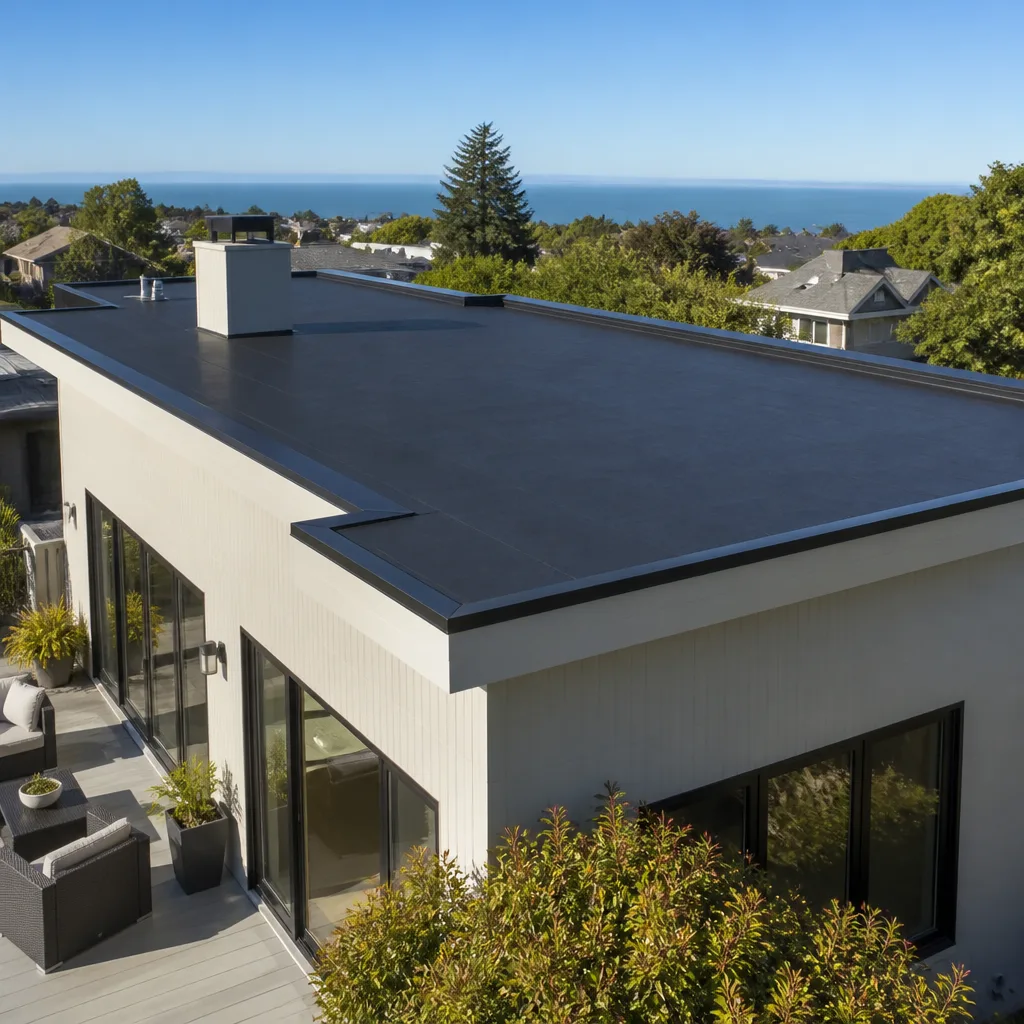
Wood shake, while attractive, performs poorly in Fresno’s dry heat. It dries, splits, and becomes a fire hazard, and Fresno’s wildfire-adjacent zones carry increasing scrutiny of wood roofing. Three-tab shingles are cheaper than architectural shingles but use less asphalt and fiberglass, wear poorly under Valley sun, and we generally discourage them for anything beyond a short-term repair budget fix. Flat roofs with modified bitumen work in Fresno, but only with proper reflective coating and slope; a true flat roof in the Valley becomes a heat sink and ponding risk if not detailed properly.
What Roofing Costs in Fresno: Real Numbers
Homeowners should not have to call just to get a ballpark. Here are installed cost ranges we see in the Fresno market for a typical single-family home between 1,500 and 2,500 square feet of roof surface. These are all-in ballpark figures including tear-off, disposal, decking repair allowance, materials, and installation labor. Prices vary with roof complexity, pitch, decking condition, and access.
- Architectural asphalt shingle: $9,000 to $16,000
- Builder-grade three-tab shingle: $7,500 to $11,000 (we generally advise against this in Fresno)
- Concrete tile (with structural support already present): $18,000 to $30,000
- Standing seam metal: $17,000 to $28,000
- Modified bitumen flat or low-slope roof: $10,000 to $18,000
- Targeted repair (flashing, pipe boots, small shingle patches): $350 to $1,400
- Decking replacement (per sheet of plywood or OSB, as needed): $60 to $110
What drives cost differences in Fresno specifically? Roof pitch matters: a steep 8/12 roof takes longer and requires more safety rigging than a walkable 4/12. Summer heat also matters: crews working in 100-degree weather need more breaks and hydration, which extends labor hours and can push pricing during peak season. If you can schedule a roof replacement in spring or fall, you’ll often get faster scheduling and more competitive pricing. We give every homeowner a written price before any work starts, so these numbers are never a surprise.
How to Read a Fresno Roofing Estimate Line by Line
Most roofing estimates in Fresno are written as a single lump sum with a brief description. That’s a red flag. See our How to Hire a Roofing Contractor in Fresno: A Step-by-Step Guide for what to expect instead. A proper estimate breaks down what you’re actually paying for. Here’s what a legitimate line-item estimate should include, and what each line means.
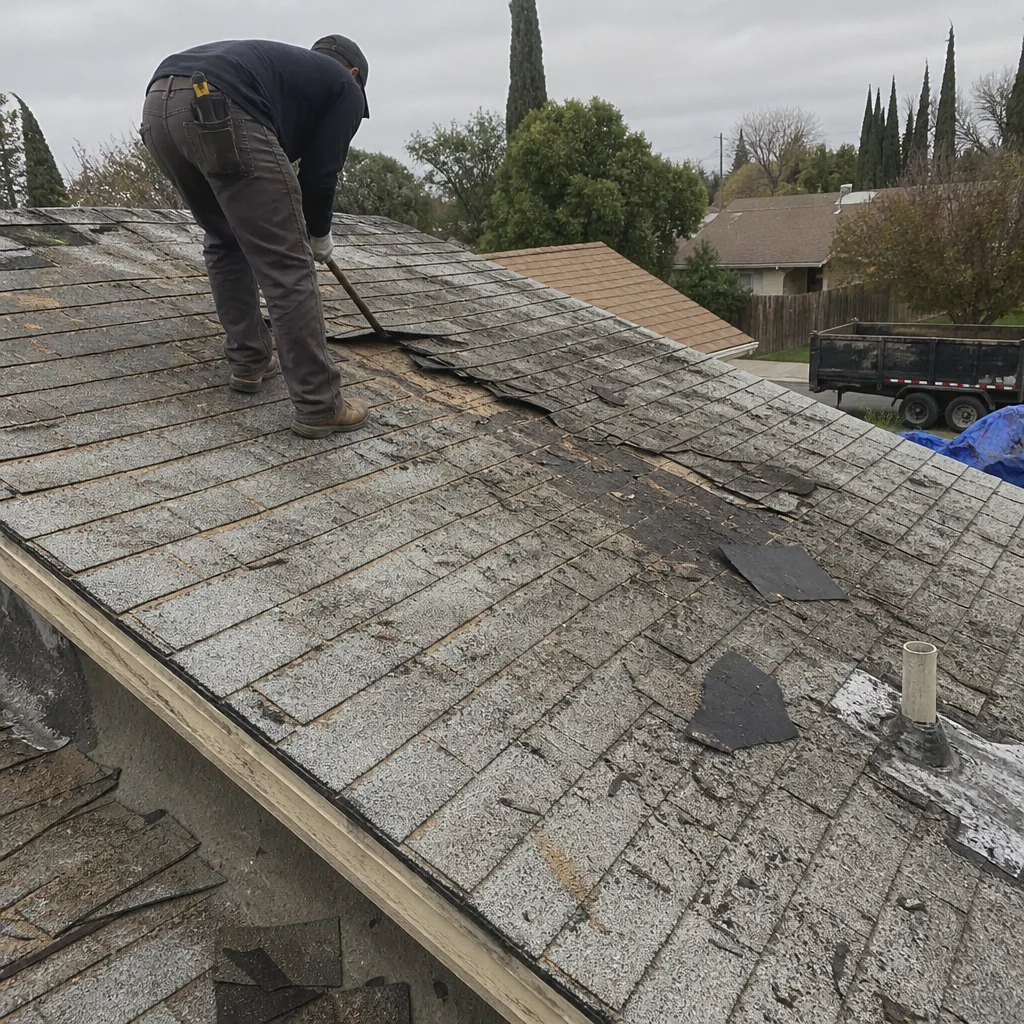
- Tear-off and disposal: This covers removing existing roofing material down to the decking and hauling it away. Includes dump fees and a magnet sweep for nails. If this line is missing, ask where the old roof goes.
- Decking inspection and replacement allowance: This covers replacing rotted or damaged plywood or OSB under the shingles. A quote should state a per-sheet price for any decking replaced beyond the allowance. This is normal and honest, not a trick.
- Underlayment: The water-resistant barrier between the decking and the shingles. In Fresno, we recommend synthetic underlayment over felt paper because it holds up longer under UV during installation and resists tearing better in high heat.
- Drip edge: The metal flashing installed at the roof edges to direct water away from the fascia. It’s required by code in most jurisdictions and cheap insurance against fascia rot. If it’s not on the estimate, it’s probably not being installed.
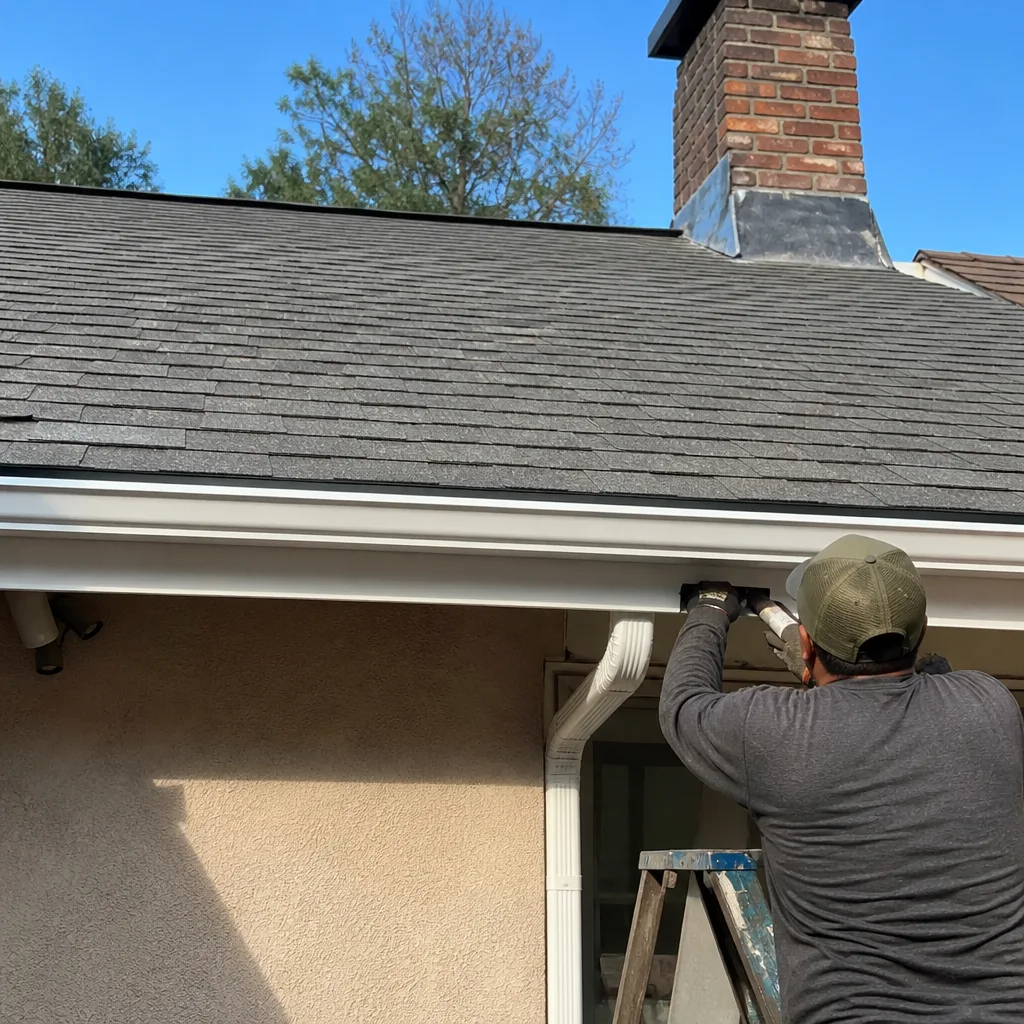
- Flashing: The metal work at chimneys, walls, valleys, pipes, and skylights. This is the most common failure point in Fresno roofs. The estimate should specify which flashings get replaced, not just “reflash as needed.”
- Ventilation: Ridge vents, soffit vents, or both. This line is often omitted entirely, which is a serious problem in Fresno (see the ventilation section below).
- Material brand and model: A legitimate estimate names the manufacturer and product line. If it just says “30-year architectural shingle,” ask for the specific product.
- Warranty terms: Manufacturer warranty covers materials. Workmanship warranty covers installation. Both should be stated in writing.
At Brennan Roofing Co Fresno home, every estimate includes all of these lines, and the price goes on paper before any work begins. No exceptions.
Passing Inspection vs. Lasting 25 Years
Here’s a truth most roofing companies in Fresno won’t say out loud: a roof can pass a city inspection and still fail early. Building inspection verifies code compliance, not craftsmanship. Code minimums are exactly that, minimums. A roof installed to bare minimum standards will pass inspection on day one and may leak or wear prematurely years later. The difference between a roof that passes and a roof that lasts comes down to details most inspectors never see and most homeowners never know to ask about.
Nail placement is a good example. Code specifies nail length, penetration, and rough spacing. It does not specify that every nail sits at the correct angle, driven flush without over-driving. An over-driven nail tears the shingle yarn, and that shingle is now held by a compromised fastener. In Fresno’s thermal cycling, those compromised fasteners are exactly where shingles start to lift. Another example: valley installation. Code allows multiple valley methods, but some perform better in high UV and thermal movement than others. A woven valley holds up well here; a cut valley improperly flashed can age prematurely.
Underlayment fastening is a third. Synthetic underlayment installed with cap nails at proper intervals forms a secondary water barrier that protects the decking if a shingle fails. If the underlayment is put down with staples at wide spacing, it can tear under heat expansion, and that protection is lost. None of this shows up in an inspection report.
This is what we call The Garrison Standard at Brennan Roofing: a written, defined installation standard that goes beyond code minimums. It covers nail placement, flashing detailing, ventilation requirements, and clean-up, and it’s the same standard on every job, from a small roof repair in Fresno to a full replacement. If it’s not done right, the 365-Day Done Right Promise means we make it right, in writing, at no charge for a full year.
Ventilation: The Fresno-Specific Detail Most Roofers Skip
Roof ventilation matters in every climate, but in Fresno it’s not optional. Attic temperatures here routinely exceed 140 degrees in summer. That heat radiates down into your living space, forcing your air conditioner to work harder, but it also bakes the underside of your shingles, shortening their life. Proper ventilation is the difference between a shingle that lasts 20 years and one that’s cooked by 12.
A properly ventilated Fresno roof has balanced intake and exhaust: soffit vents along the eaves bring in cooler outside air, while a ridge vent at the peak lets hot air escape. This creates a continuous air current that keeps the attic closer to ambient temperature and reduces moisture buildup during tule fog season. The building code specifies minimum ventilation ratios, but again, code minimum is not climate-specific. For Fresno’s heat, we recommend exceeding the minimum net free vent area on most homes.
When a roofer gives you an estimate that doesn’t mention ventilation, that’s not a minor detail. It’s a missing component. Ask directly: “What ventilation are you installing, and what’s the net free vent area?” A roofer who can’t answer that question in numbers has not thought about your attic. A roofer who can, and who includes it as a specific line on the estimate, is doing the job properly. In our experience with roof inspection in Fresno, ventilation deficiencies are the most common overlooked issue on roofs between 8 and 15 years old.
Permits and Code Requirements in Fresno
Fresno requires a building permit for roof replacement and most roof repairs that go beyond minor patching. The permit process exists to verify that the work meets California Building Code and the California Energy Code, specifically Title 24, which sets cool roof requirements for certain re-roofing projects in the Central Valley.
Here’s what to know: a legitimate roofing company pulls the permit, schedules the inspection, and stands behind the work when the inspector walks it. A company that offers to do the job “without all that permit hassle” is offering to skip a process that protects you. Unpermitted work can create problems when you sell your home, and improperly installed roofing that violates Title 24 can disqualify homeowners from energy efficiency rebates and create title disclosure issues.
Permit costs in Fresno vary by project valuation, but typically run several hundred dollars for a re-roof. The permit fee is separate from roofing labor and materials, and a transparent estimate shows it as a distinct line item. Inspections typically happen at two stages: after the old roof is removed and decking revealed, and after the new roof is installed. A company that handles this end-to-end, from permit pull to final sign-off, is doing what a professional Fresno roofer should do.
If you’re wondering whether a company handles permits properly, ask: “Who pulls the permit, and who’s named on it?” The answer should be the roofing company, not the homeowner. If a roofer asks you to pull your own permit, that’s a signal they’re not licensed to work in Fresno, and you should end the conversation.
Common Mistakes to Avoid
- Choosing shingles by color alone. In Fresno, solar reflectance matters more than aesthetics. Dark shingles absorb heat, increase attic temperatures, and age faster. Choose a cool-roof rated product in a lighter color unless you have a specific architectural reason not to.
- Skipping the decking inspection. You can’t see rotted decking from the ground, and a roofer can’t know its condition until the old roof comes off. If an estimate doesn’t include a per-sheet decking replacement price, you’ll be negotiating that cost at a moment when you have no leverage.
- Accepting a verbal estimate. A number spoken in a driveway isn’t a commitment. Get it in writing. Any roofer who won’t put a price on paper before work starts is leaving the door open to adjust it later.
- Reusing old flashing. Flashing is the most common leak point in Fresno, and reusing old metal to save a few hundred dollars is a false economy. New flashing on a new roof is non-negotiable.
- Ignoring ventilation. A roof without proper ventilation fails early in this climate. If the estimate doesn’t mention ventilation, the roofer isn’t addressing one of the top three factors in roof longevity.
- Hiring based on the lowest bid. Fresno’s roofing market has a wide price spread, and the lowest bid usually reflects omitted line items, cheaper materials, or unlicensed labor. Compare estimates line by line, not by bottom line.
- Delaying a small repair. A loose flashing or damaged pipe boot in the San Joaquin Valley can go from a $400 repair to a $4,000 decking and interior repair in one wet winter. Address small issues while they’re small.
When to Call a Professional
Any work involving roof access, electrical wiring near the roofline, or structural questions is not a DIY job, and Fresno’s summer heat makes roof work more dangerous, not more accessible. Call a professional if you see water stains on ceilings or walls, missing or cracked shingles after a storm, daylight visible through the roof deck from the attic, granules collecting in gutters, or flashing that has pulled away from a chimney or vent. If you’re planning to sell your home in the next few years, a documented roofing company in Fresno inspection and repair history adds real value at closing. Brennan Roofing Co Fresno offers free estimates in Fresno, CA, and you’ll always get a written price before any work begins. Call (559) 785-2160.
Frequently Asked Questions
A full roof replacement in Fresno typically costs $8,500 to $22,000 depending on roof size, material, pitch, and decking condition, with architectural shingle being the most common mid-range choice at $9,000 to $16,000. For an exact quote on your specific home, call (559) 785-2160, and you’ll get a written price in hand before any work starts.
An architectural asphalt shingle roof can last 20 to 25 years in Fresno with proper ventilation and cool-roof material selection, while concrete tile and standing seam metal can last 40 to 60 years. Fresno’s UV exposure typically shortens manufacturer-rated lifespans by 20 to 30 percent compared to milder climates.
Yes, the City of Fresno requires a building permit for roof replacement, and the roofing company should pull the permit, schedule inspections, and be named on the permit. A roofer who asks you to pull your own permit is likely unlicensed, which is a red flag.
Standing seam metal and concrete tile perform best in Fresno’s heat because they reflect solar radiation and tolerate thermal movement, but architectural cool-roof shingles from GAF or CertainTeed offer the best balance for most budget ranges. Wood shake and dark three-tab shingles are the worst choices for this climate.
It’s possible, and building code generally allows one overlay, but we don’t recommend it in Fresno because the trapped heat between layers accelerates shingle aging and hides decking problems that can’t be inspected. A full tear-off costs more upfront but gives you a clean deck, full inspection, and longer service life.
Look for a written estimate before work starts, a workmanship guarantee in writing, proof of licensing and insurance, and a direct answer when you ask who pulls the permit. Still weighing your options? Read our DIY vs Professional Roofing: The Fresno Homeowner’s Decision Guide before deciding. At Brennan Roofing Co Fresno, every job runs under The Garrison Standard: written pricing, background-checked uniformed technicians, and a 365-Day Done Right Promise. Call (559) 785-2160 for a free estimate.
The Bottom Line
Fresno’s roofing problems are specific: high UV exposure, thermal cycling, tule fog moisture, and hail risk all combine to shorten the life of the wrong material installed the wrong way. The right roof for this Valley is one built from cool-roof rated materials, detailed flashing, balanced ventilation, and installed to a standard that goes beyond code minimums. The right company puts prices in writing before work starts, pulls permits in its own name, and stands behind the work in writing for a full year. If you’re ready to price a roof that’s built for Fresno, not for national averages, call (559) 785-2160 for a free estimate. We’ll send a background-checked, uniformed technician to your home, give you a written price on the spot, and never ask you to decide before you’ve had time to think it through.
Written by Travis Oakley, Owner at Brennan Roofing Co Fresno, serving Fresno since 2000.
See the difference
 Before
 After
After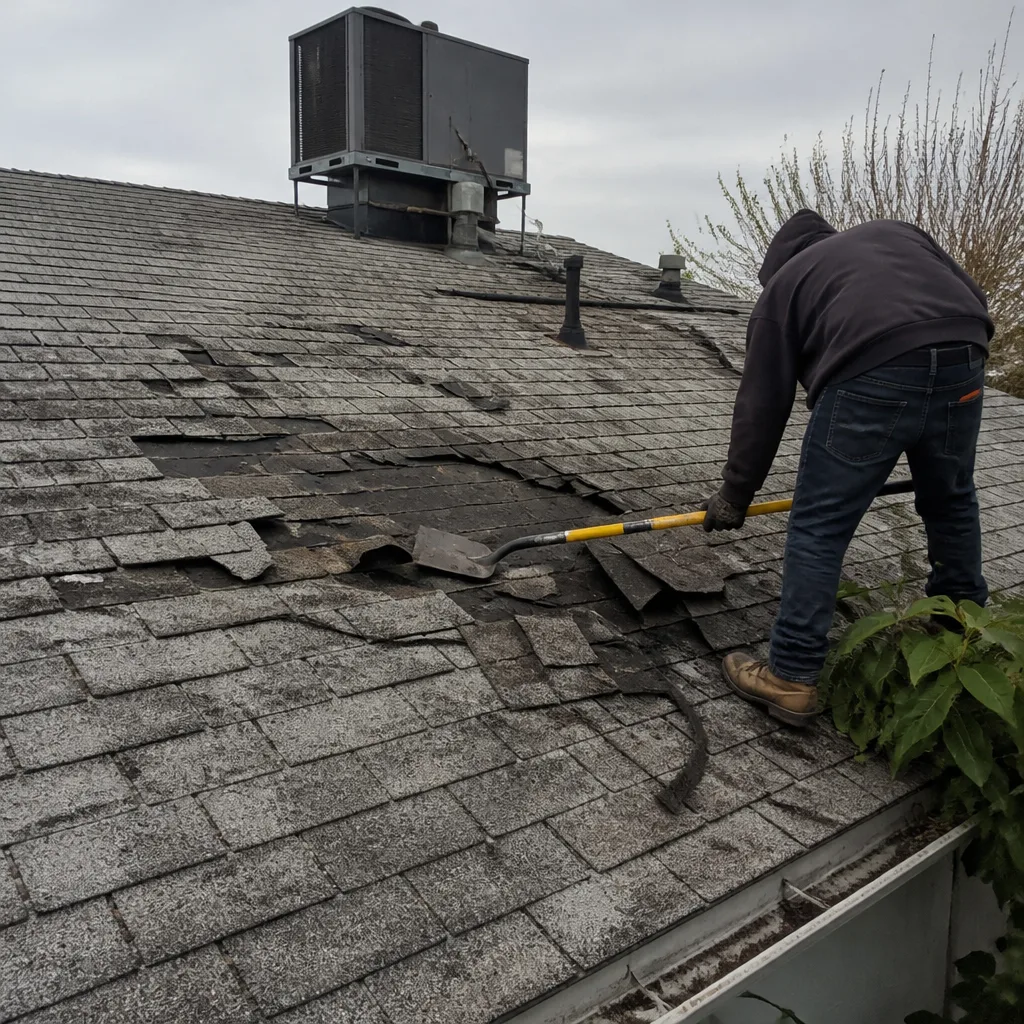 Before
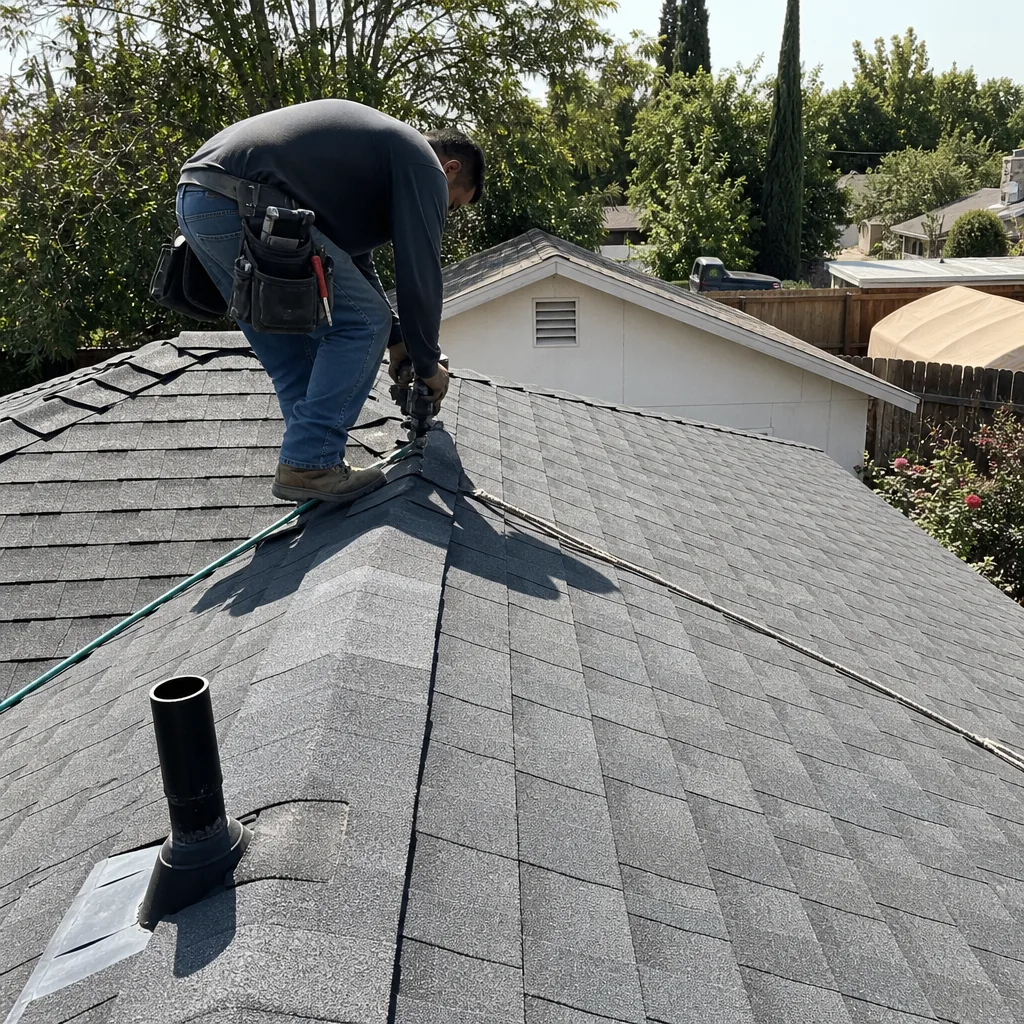 After
After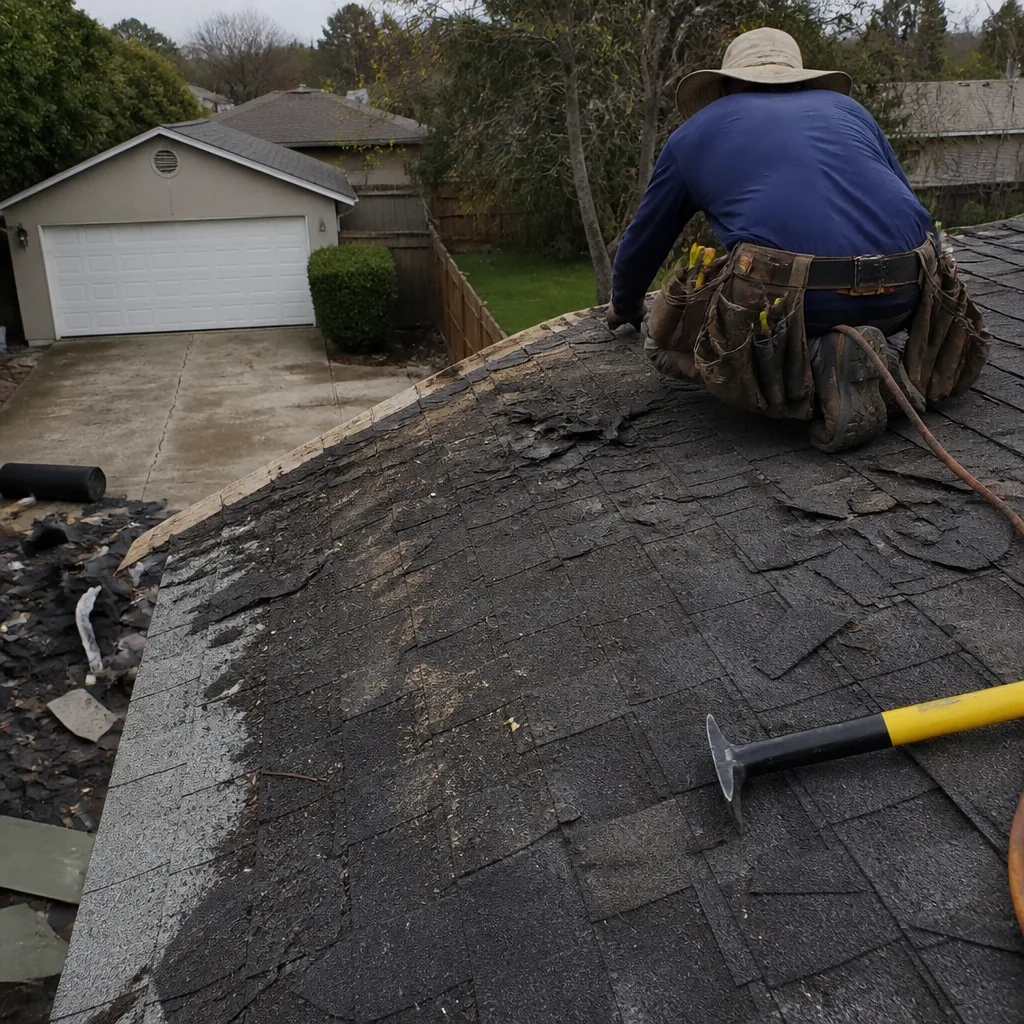 Before
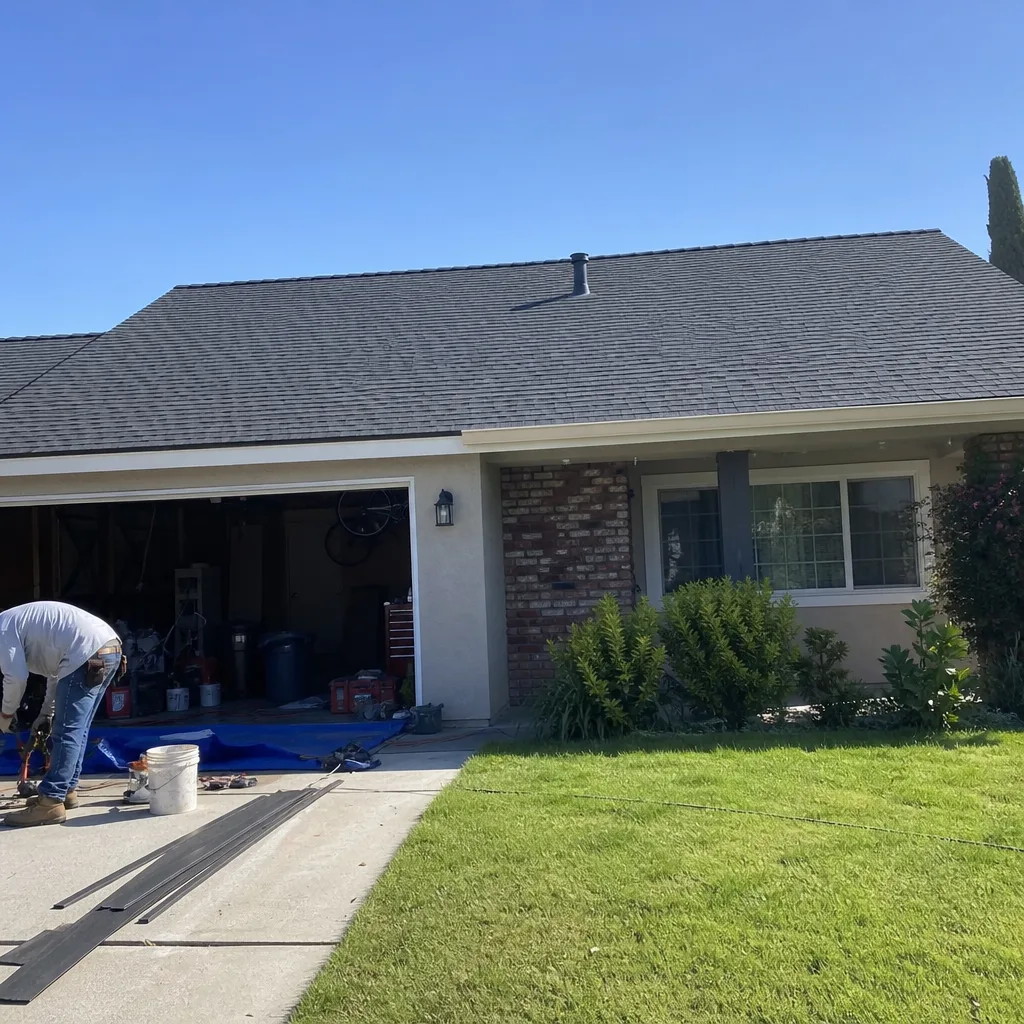 After
After