
Last updated October 17, 2026
 Metal roofing
 Architectural shingles
 Tile roofing
 GAF
GAF Owens Corning
 Flat & low-slope
Free roof inspection with deck photos before we talk money - GAF and Owens Corning certified installation
Roofing Permits, Codes & Inspections in CA: What You Need to Know
Here’s a number that surprises most Fresno homeowners: a roof replacement done without a permit fails roughly one in four home sale transactions when the buyer’s lender catches it. The permit itself might cost $380. The resulting retroactive inspection, potential tear-off of good roofing to expose decking, and delayed closing can cost twenty times that. This guide explains California’s actual roofing permit rules, where the City of Fresno adds its own requirements, how inspections work, and what happens when work gets done without the paperwork. For a broader look at roofing in the area, see The Complete Guide to Roofing in Fresno. You’ll learn how to protect yourself before, during, and years after the job.
Styles & brands we work with
Quick Answer
In California, a full roof replacement almost always requires a building permit, while minor repairs to a few shingles or a section of flashing typically do not. The rules come from the California Residential Code, but the City of Fresno enforces its own amendments on top of that code. Skipping a required permit can trigger a stop-work order, a failed home sale, or a denied insurance claim, and the fix usually costs far more than the permit fee would have.
Table of Contents
- Who Sets the Rules: California Code vs. City of Fresno Amendments
- Which Roofing Projects Require a Permit in Fresno
- Which Repairs Typically Don’t Need a Permit
- How the Fresno Permit and Inspection Process Actually Works
- How to Confirm Your Contractor Actually Pulled the Permit
- The Hidden Risk: Re-Roofing Over Existing Layers in Fresno’s Climate
- What Happens When Unpermitted Roof Work Is Discovered
- Common Mistakes to Avoid
- When to Call a Professional
- Frequently Asked Questions
- The Bottom Line
Who Sets the Rules: California Code vs. City of Fresno Amendments
California adopts the California Residential Code (CRC) as its baseline for single-family and duplex homes. The CRC is based on the International Residential Code, but California modifies it substantially. Chapter 9 of the CRC governs roof assemblies: what materials can be installed, how much weight the structure must support, how ventilation must work, and when a permit is required.
The City of Fresno adopts the CRC and then layers its own amendments on top through the Fresno Municipal Code. In Fresno, the Planning and Development Department issues roofing permits and performs inspections. When the two codes conflict, the stricter rule controls. That’s a practical answer, not a technicality: Fresno’s amendments are not suggestions.
Three Fresno-specific rules trip up homeowners more than any others:
- Re-roof weight limits. Fresno follows the CRC rule that a roof structure can carry no more than two layers of roofing. If your home already has two layers, a re-roof requires a full tear-off down to the decking before new material goes on. Contractors who skip this step produce a roof that cannot pass inspection.
- Decking inspection requirements. Fresno inspectors require the roof deck to be visible during the inspection. That means the inspection must happen after tear-off and before new underlayment covers the plywood or OSB. A contractor who finishes the roof before inspection has created a re-inspection problem that costs time and money.
- Cool roof requirements. California’s Title 24 energy code applies to Fresno. New roofs must meet minimum solar reflectance and thermal emittance values unless the home qualifies for an exemption. This affects what shingle colors and types can be installed. Dark roofs in Fresno’s summer heat often fail the prescriptive cool roof pathway and require additional documentation.
What controls your project day to day is the City of Fresno inspector’s interpretation of the code. We’ve seen homeowners spend hours comparing state and local code text, only to find that the inspector’s read of a single section determines whether a roof passes. A contractor who pulls permits in Fresno regularly knows what those inspectors look for.
If you need a roof inspection or replacement in the Fresno area, start with our Roof Inspection in Fresno page to see what a documented inspection covers.
Which Roofing Projects Require a Permit in Fresno
The short rule: if the work changes the roof structure or replaces a significant portion of the roof covering, you need a permit. Here’s the practical breakdown for Fresno homeowners.
Projects that require a permit:
- Full roof replacement. Any complete tear-off and replacement of the roof covering requires a building permit. This is not a gray area. If all the shingles come off and new ones go on, the permit is mandatory.
- Re-roofing over an existing layer. Adding a second layer of shingles over an existing layer requires a permit. The inspector must verify the structure can carry the added weight and that the existing layer is sound enough to serve as a base.
- Structural deck repair or replacement. If the plywood or OSB decking has rot, termite damage, or delamination and sections must be replaced, a permit is required. Structural work triggers plan review in some cases.
- Rafter or truss repair. Any modification to the roof framing, even sistering a single cracked rafter, requires a permit and possibly an engineer’s letter.
- Skylight installation or replacement. Cutting a hole in the roof for a new skylight is structural work. Even replacing an existing skylight with a different size requires a permit.
- Roof-mounted solar panel installation. Solar installers pull their own permits through the same Fresno office, but the roof portion of the work must pass the same decking and structural checks.
What the permit actually costs in Fresno
Fresno’s roofing permit fees are calculated based on the valuation of the work. For a typical 2,000 square foot single-family home with a full tear-off and replacement, the permit fee typically runs between $250 and $500. Larger homes, homes with steep slopes, or projects involving structural repair climb higher. The exact number depends on the declared job value and the current fee schedule. A written line-item quote from your contractor should show the permit fee as a separate line. If it doesn’t, ask why.
Here’s a plain-language table of typical permit fees for common Fresno roofing projects:
| Project Type | Typical Permit Fee Range | Typical Timeline |
|---|---|---|
| Re-roof over existing layer (no structural work) | $250 – $400 | Issued in 1 – 3 business days |
| Full tear-off and replacement | $300 – $500 | Issued in 1 – 5 business days |
| Tear-off with decking replacement | $350 – $700 | Issued in 3 – 7 business days; may require plan review |
| Structural repair (rafter/truss work) | $500 – $1,200 | Plan review required; 1 – 3 weeks |
The permit fee is a fraction of the total project cost. On a $14,000 roof replacement, a $400 permit is about 3%. That’s the cheapest insurance you will ever buy on your home.
Which Repairs Typically Don’t Need a Permit
Fresno follows the CRC’s general principle: repairs that restore a small area to its original condition without changing the structure do not require a permit. Here’s what typically qualifies.
- Shingle replacement under 100 square feet. Replacing a dozen blown-off shingles after a winter storm does not require a permit. The work is cosmetic patch repair, not a roof recovering.
- Flashing repair or replacement. Replacing a section of damaged chimney flashing, pipe boot flashing, or valley flashing does not require a permit, provided the decking underneath is not being modified.
- Small leak repairs. Cutting out a small section of damaged underlayment and patching it generally does not require a permit. Fresno inspectors are not interested in a 2-foot patch.
- Gutter work. Gutter repair, gutter replacement, and downspout work fall outside the roofing permit requirement entirely.
- Vent replacement. Swapping out a damaged roof vent or adding a box vent does not require a permit unless the hole size changes.
The line between “repair” and “replacement” matters. If a storm takes out 300 square feet of shingles and the entire roof needs re-cover, that’s a replacement, not a repair, and the permit applies. When in doubt, call the Fresno Planning and Development Department and ask. The person on the phone will give you a straight answer, and you avoid guessing wrong.
How the Fresno Permit and Inspection Process Actually Works
Here’s the step-by-step sequence for a permitted roof replacement in Fresno. Understanding this flow helps you hold your contractor accountable at each stage.
- Contractor submits the permit application. A licensed contractor pulls the permit through the Fresno Planning and Development Department. The application includes the project valuation, the scope of work, the roof material being installed, and the home’s address. Homeowners can pull their own permits, but if you hire a licensed roofer, the contractor should pull it under their license.
- Permit is issued. For straightforward re-roofs with no structural changes, Fresno issues the permit within one to five business days. The permit must be posted on the job site. You should see the permit card on your front window or in the contractor’s paperwork before any material gets delivered.
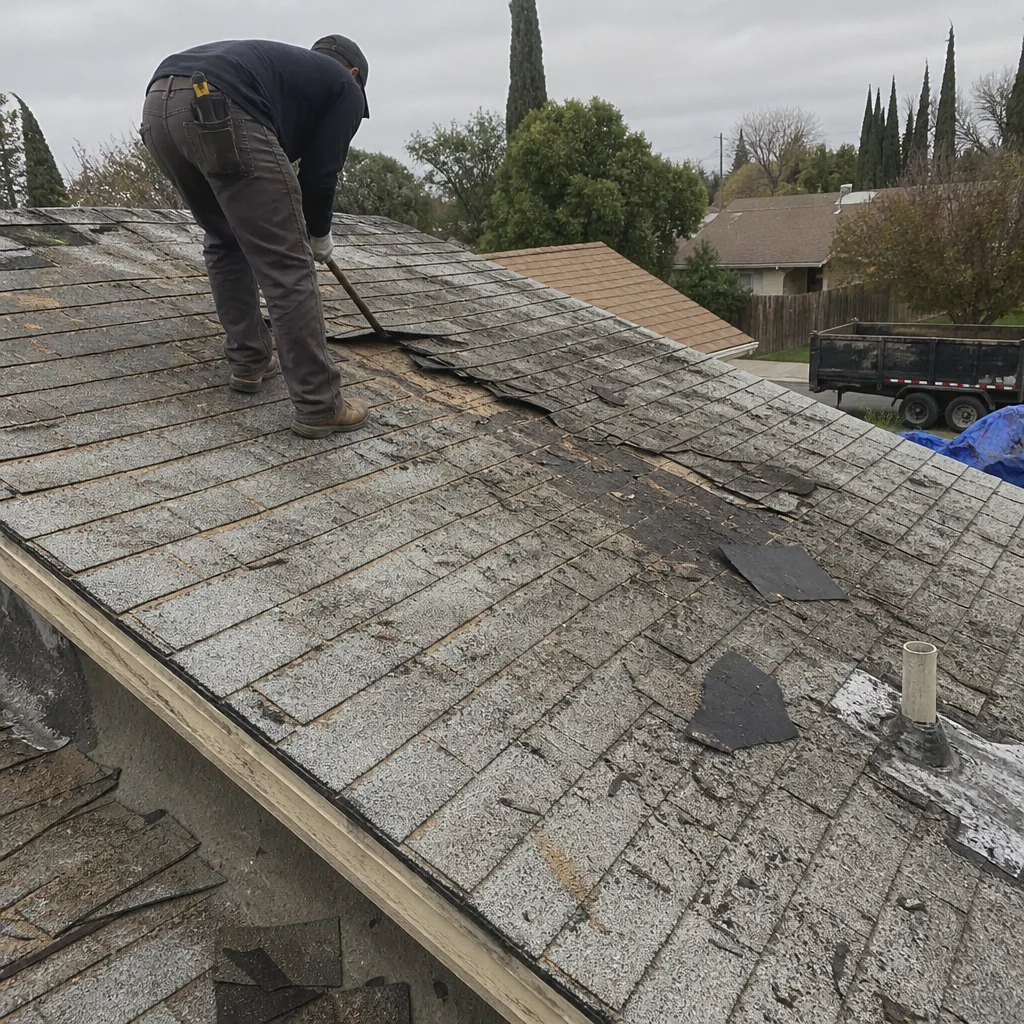
- Tear-off begins. The old roofing comes off down to the decking. For full replacements, this is the moment when hidden problems surface: rotted decking, failed fasteners, improperly spaced rafters. The contractor should flag any structural issues before covering anything.
- Decking inspection (if required). Fresno requires a deck inspection before underlayment goes on when decking has been replaced or when the existing structure must be verified. The contractor schedules this inspection. If the roof gets covered before the inspector sees the deck, the inspector can order a partial re-open of the roof. That’s expensive and avoidable.
- Underlayment and roofing installation. After the deck passes inspection, the underlayment, ice and water barrier, drip edge, and roof covering go on. The contractor installs per the manufacturer’s fastening schedule and the CRC’s wind-uplift requirements for Fresno’s climate zone.
- Final inspection. Once the roof is complete, the contractor schedules the final inspection. The inspector verifies the finished roof: material type, fastening pattern, flashing details at penetrations and walls, ventilation, and compliance with Title 24 cool roof requirements where applicable. If everything passes, the inspector signs the permit card and the permit is finalized.
The homeowner does not schedule these inspections. The contractor does. If your contractor suggests otherwise, that’s a red flag. A contractor who pulls the permit is legally responsible for getting the work inspected and approved. If the permit stays open, the work is not legally complete, and that open permit will haunt you at sale time.
How to Confirm Your Contractor Actually Pulled the Permit
This is the step most homeowners skip, and it’s the one that matters most. You don’t need to take your contractor’s word that the permit exists. Here’s how to verify it yourself in Fresno.
- Ask for the permit number before work starts. A contractor who has pulled the permit will have a number. It starts with a Fresno permit prefix and is searchable online. If the contractor can’t produce a number, the permit does not exist.
- Check the Fresno Accela Citizen Access portal. The City of Fresno maintains an online permit lookup system. Enter your address or the permit number and you can see the permit status, the issued date, the inspection history, and whether the permit is open or finalized.
- Look for the permit card on the job site. Fresno requires the permit to be posted. It’s a small yellow or white card, usually taped to a window or staked near the driveway. If you don’t see it, ask.
- Verify the contractor’s license matches the permit. The permit should be pulled under the same license number as the contractor you hired. If a subcontractor pulls the permit under a different license, you want to know why.
- Check that the permit is finalized after the final inspection. An open permit is an incomplete permit. After the final inspection passes, confirm in the portal that the status shows “finaled” or “complete.” Save a screenshot for your records.
In our experience, the homeowners who get burned on unpermitted work are not the ones who never asked. They’re the ones who asked, got a verbal “yes, we pulled it,” and never checked. A two-minute portal search is the difference between a documented roof and a mess at closing time.
If you’re planning a roof replacement and want the permit handled correctly start to finish, our roofing company in Fresno page walks through how we handle the paperwork on every job.
The Hidden Risk: Re-Roofing Over Existing Layers in Fresno’s Climate
Fresno’s summer temperatures climb past 100 degrees for weeks at a stretch. A roof assembly in that heat behaves differently than one in a coastal climate. Shingles soften, adhesives cure faster, and trapped moisture between layers expands. For year-round maintenance tips, read Seasonal Roofing Care for Fresno: Year-Round Homeowner’s Guide. That’s why the two-layer maximum matters more in Fresno than in milder parts of California.
When a roofer adds a second layer of shingles over an existing layer, the new roof breathes less. Heat that would normally dissipate through the assembly gets trapped. In Fresno, trapped heat accelerates shingle degradation from underneath. Granules loosen, shingles curl, and the roof reaches the end of its service life years earlier than the manufacturer’s warranty suggests.
There’s also the inspection reality. A Fresno inspector examining a two-layer re-roof will look at the existing layer’s condition before allowing the overlay. If the underlying shingles are too deteriorated, the overlay gets rejected, and the contractor must tear off to the deck anyway. That’s a conversation you want to have before the job starts, not after the inspector’s visit.
The math is simple. A re-roof over an existing layer might save $1,500 to $2,500 on tear-off and disposal costs. But you’re buying a shorter-lived roof with reduced ventilation and a higher chance of moisture problems in a climate that already punishes roofs hard. Most Fresno homeowners we talk to decide the savings aren’t worth it once they understand what they’re trading away.
What Happens When Unpermitted Roof Work Is Discovered
Unpermitted roof work surfaces in three common scenarios. Here’s what each looks like and how it gets resolved.
During a home sale
This is the most common discovery point. The buyer’s home inspector sees signs of a recent roof. The buyer’s lender asks for the permit. No permit exists. Now the seller has a problem. For warning signs to catch earlier, see Roofing Warning Signs: A Fresno Homeowner’s Reference Guide. The resolution usually involves a retroactive permit and inspection. The City of Fresno will issue a permit after the fact, but the inspection may require destructive testing: the inspector may require shingles to be removed in specific areas to expose the decking and verify the installation. That partial tear-off costs $500 to $1,500 and the roof must be re-repaired afterward. The sale stalls while this plays out. In competitive buyer markets, the deal can die entirely.
During an insurance claim
A windstorm rips shingles off a roof that was replaced three years ago without a permit. The homeowner files a claim. The adjuster asks for the permit documentation. When none exists, the claim gets complicated fast. Some policies deny coverage for unpermitted work that fails. Others pay a reduced amount. The carrier’s position is straightforward: unpermitted work is not verifiable work, and unverifiable work is not fully insurable.
During a code enforcement action
A neighbor reports construction, or a city inspector drives by and sees roofing activity. A stop-work order gets posted. The contractor must stop immediately, the permit gets pulled retroactively, and the project timeline extends by weeks. Stop-work orders also create a public record that follows the property.
How to remediate unpermitted roof work
- Document everything. Gather receipts, contracts, photos of the work in progress if you have them, and any correspondence with the original contractor.
- Contact the original contractor. If they’re still in business and were licensed, they may be willing to pull the retroactive permit and handle the inspection.
- If the contractor is gone, hire a licensed roofer. A legitimate Fresno roofer can pull the retroactive permit, prepare the roof for inspection, and complete whatever corrective work the inspector requires.
- Get the inspection done. The inspector determines whether the existing work meets code. If it doesn’t, the corrective work gets done, and the permit gets finalized.
- Keep the finalized permit in your records. This document is now part of your home’s permanent file. It gets disclosed at sale and proves the work was brought into compliance.
Retroactive permits are never fun, but they’re resolvable. The cost ranges from a few hundred dollars for a simple inspection to several thousand if the roof requires corrective work. It’s still cheaper than a failed sale or a denied claim.
Common Mistakes to Avoid
- Trusting a verbal “we pulled the permit.” You should see the permit number in writing, and you should be able to look it up online. Anything less is a risk you don’t need to take.
- Choosing the lowest bid without checking permit inclusion. Some Fresno bids look cheap because they omit the permit. If one roofer quotes $800 less than everyone else and won’t show the permit line item, that’s your answer.
- Letting the roof get covered before the deck inspection. Once underlayment goes over the deck, the inspector can’t see the structure. The re-inspection may require re-opening the roof. That’s waste, not savings.
- Re-roofing over two existing layers. It’s against code. The inspector will reject it. The roof will need a full tear-off. You’ll pay for the overlay work and then pay again to undo it.
- Hiring an unlicensed roofer to save money. Unlicensed contractors cannot legally pull permits in Fresno. The “savings” is a guarantee of unpermitted work.
- Ignoring the cool roof requirement. Fresno enforces Title 24. A roof that fails the cool roof check may still be functional, but the permit won’t finalize until the requirement is met or an exemption is documented.
- Failing to keep the finalized permit paperwork. The permit is not a receipt you throw away. It’s a permanent home record that proves the roof was legally installed. Buyers, lenders, and insurers will ask for it.
When to Call a Professional
You should call a licensed roofing contractor when you’re planning a full replacement, when a repair scope is large enough that the permit question is unclear, when you’re buying a home with a questionable recent roof, or when unpermitted work needs remediation. The permit process in Fresno has enough procedural detail that going it alone costs more in time and mistakes than the contractor’s fee. Brennan Roofing Co Fresno offers free estimates in Fresno. Call (559) 785-2160 to schedule a visit. We’ll assess the roof, explain what permit path applies, and put a written price in front of you before any work begins.
Frequently Asked Questions
Yes. A full roof replacement in Fresno requires a building permit from the Fresno Planning and Development Department. The permit is mandatory whether you do a complete tear-off or a re-roof over an existing layer. Minor repairs under roughly 100 square feet of shingles typically do not require a permit. Call (559) 785-2160 if you’re unsure which category your project falls into.
A typical Fresno roofing permit for a single-family home runs between $250 and $500, depending on the project valuation and whether structural work is involved. Structural repairs that require plan review cost more. The permit fee should appear as a separate line item on your contractor’s written estimate.
Either one technically can, but when you hire a licensed Fresno roofing contractor, they should pull the permit under their license. If the contractor asks you to pull your own permit, that’s a signal they may not be properly licensed or insured. Ask for the permit number in writing and verify it online.
Fresno inspectors check the roof deck before underlayment goes on, then check the finished roof after installation. The final inspection covers the material type, fastening pattern, flashing details at chimneys, walls, and pipe penetrations, ventilation, and Title 24 cool roof compliance. If any element fails, the inspector lists the corrections and schedules a re-inspection.
You can, but you’ll likely have to resolve the permit question first. A buyer’s lender will often require a retroactive permit and inspection before funding the loan. The retroactive process can cost $500 to $1,500 or more if the inspector requires correcting work, and it delays closing. Remediating before you list is almost always the cheaper path.
Yes. Fresno building permits carry an expiration date, typically tied to when work began or when the last inspection occurred. Permits that languish without inspections for an extended period can expire and require renewal. The contractor should complete the job and final the permit without leaving it open. Call (559) 785-2160 if you need help checking your permit status.
The Bottom Line
Roofing permits in California aren’t optional paperwork. They’re the legal record that your roof was installed to a verifiable standard, and they protect you through the three moments that matter most: the inspection, the insurance claim, and the home sale. In Fresno, the process is straightforward when a licensed contractor handles it: permit application, deck inspection, final inspection, finalized permit. Skip any step and the problem compounds. The fix is to work with a contractor who puts the permit line on the written estimate, pulls it under their license, and closes it out after the final inspection. That’s how a roof gets documented for the life of the home. For more guides & resources, visit our blog.
If you need roof repair in the Fresno area, see our Roof Repair in Fresno page. For a full replacement, start with Brennan Roofing Co Fresno home services overview. Call (559) 785-2160 to schedule your free estimate.
Written by Travis Oakley, Owner at Brennan Roofing Co Fresno, serving Fresno since 2000.
See the difference
 Before
 After
After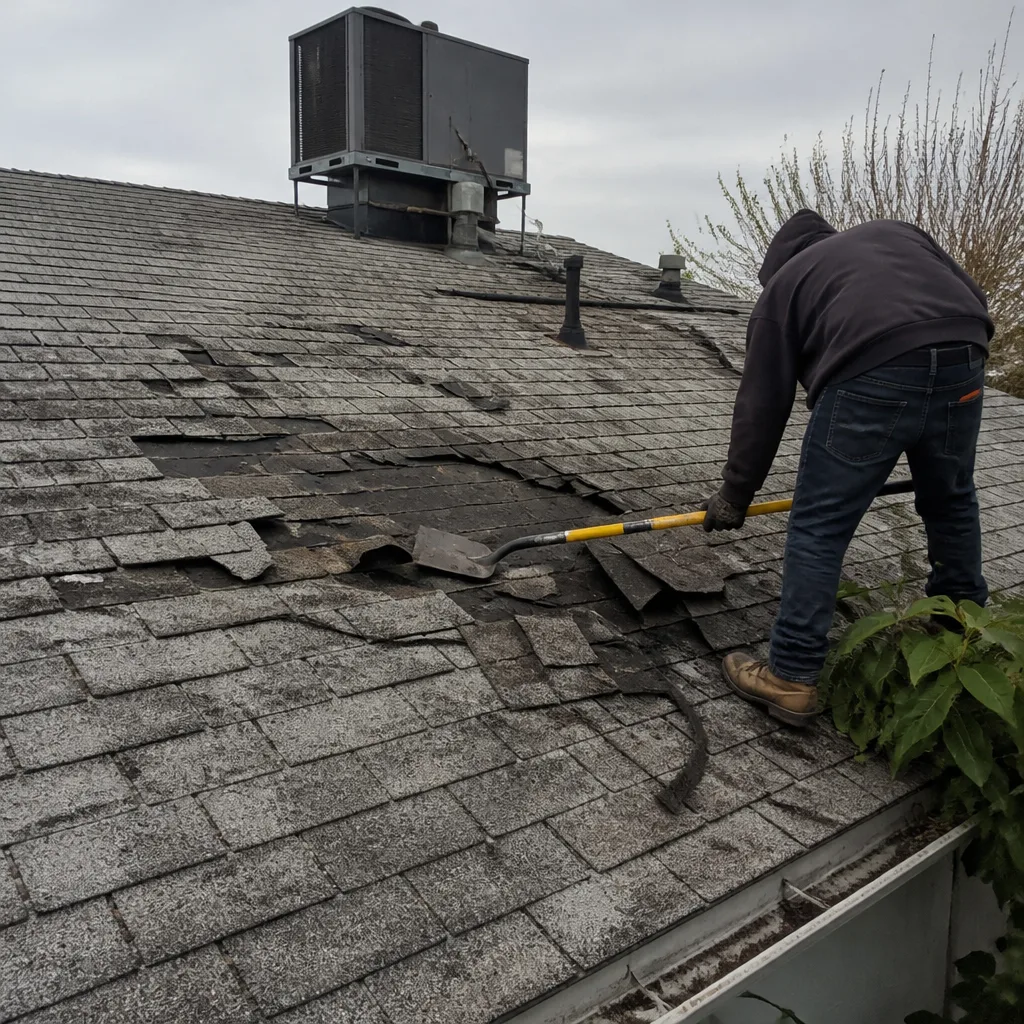 Before
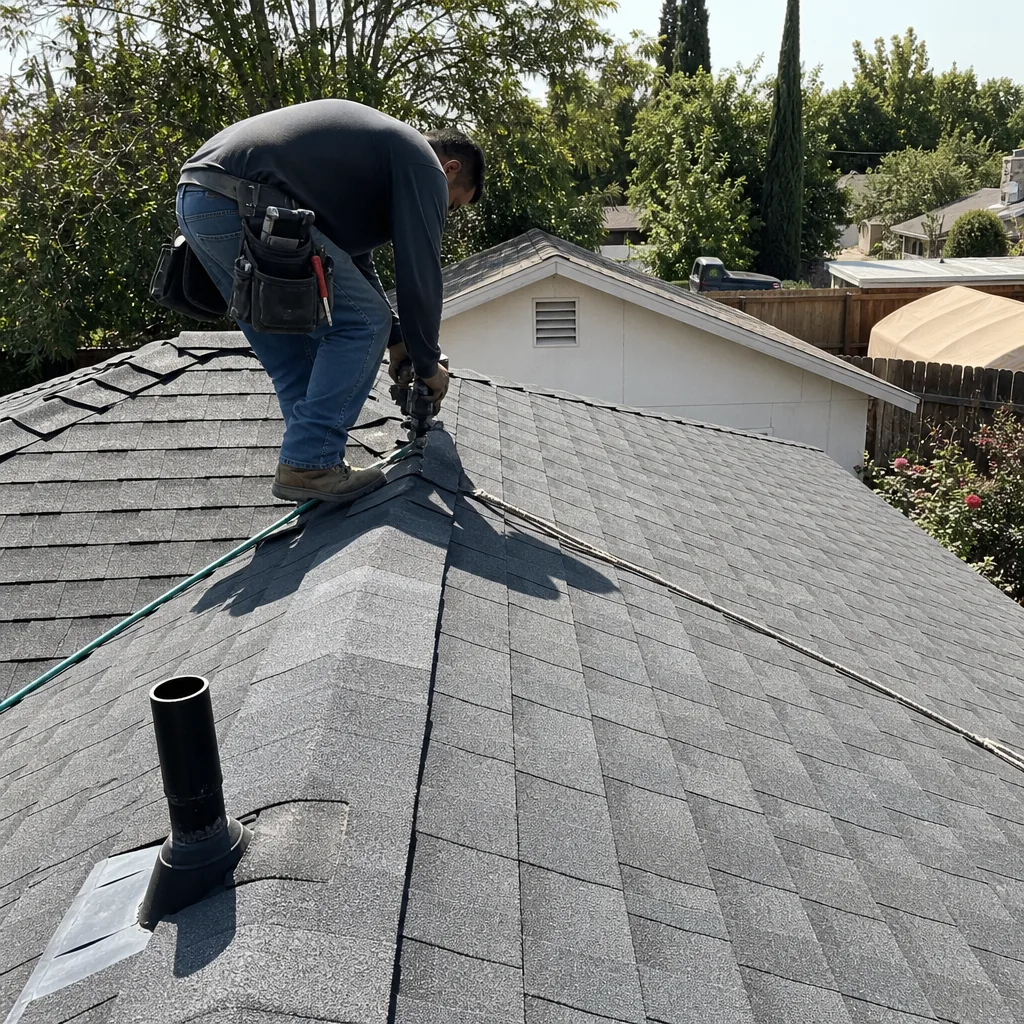 After
After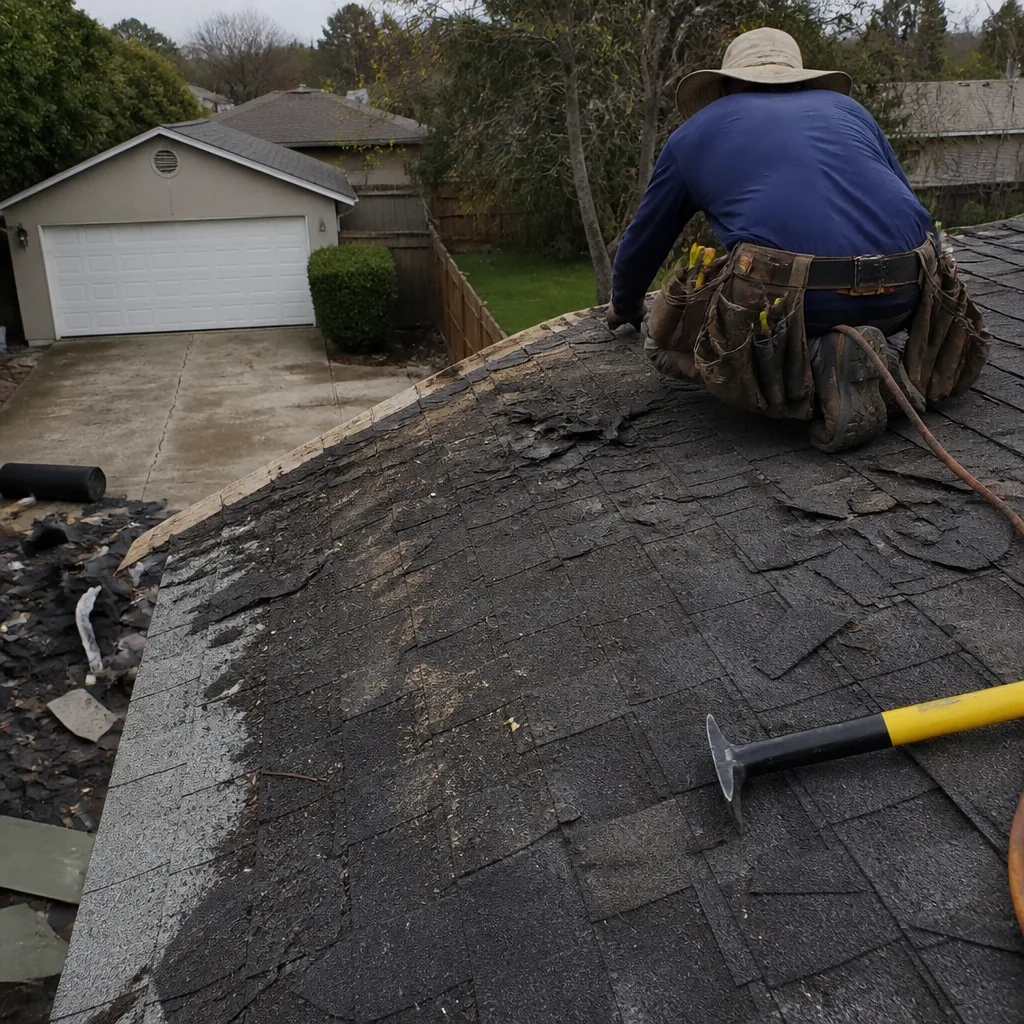 Before
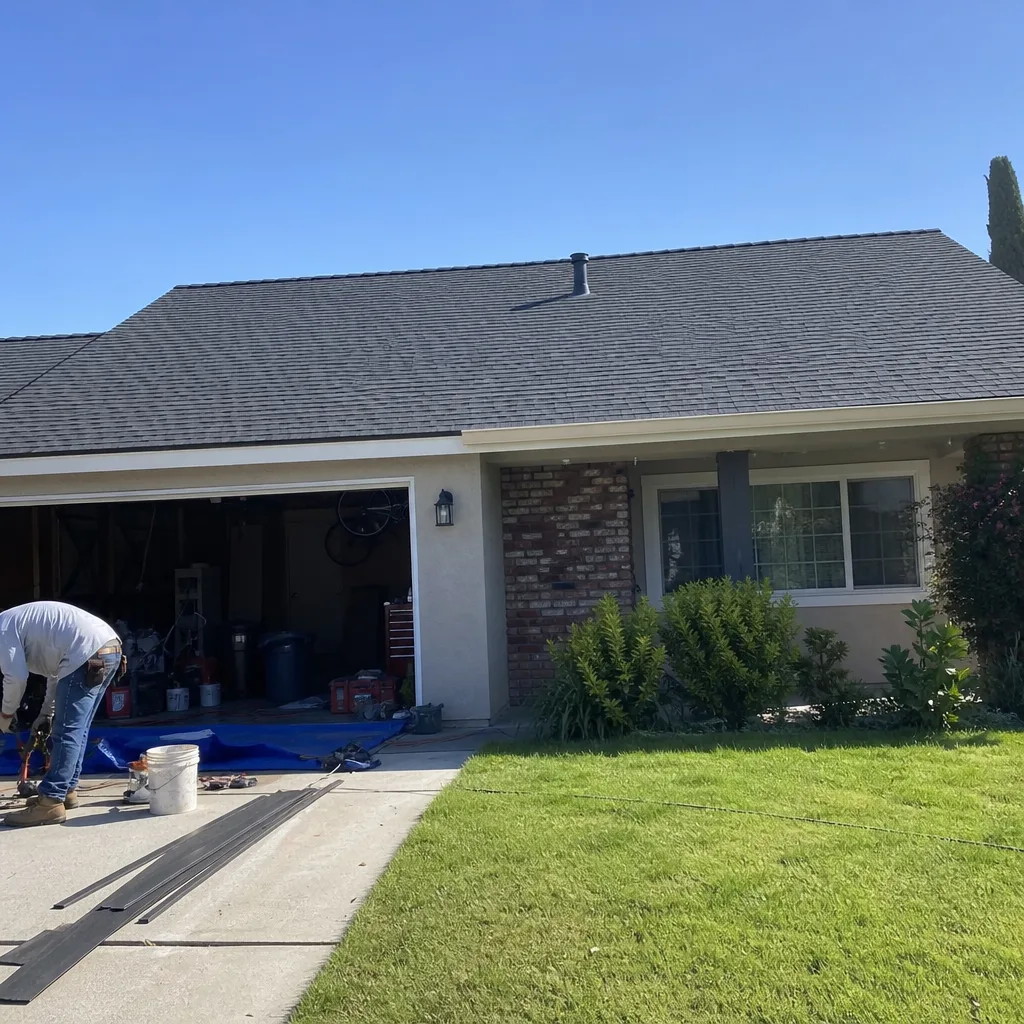 After
After