
Last updated October 17, 2026
 Metal roofing
 Architectural shingles
 Tile roofing
 GAF
GAF Owens Corning
 Flat & low-slope
Free roof inspection with deck photos before we talk money - GAF and Owens Corning certified installation
Roofing Warning Signs: A Fresno Homeowner’s Reference Guide
There are exactly three roofing warning signs that require a phone call within 24 to 48 hours. Everything else on most “warning signs” lists can be evaluated on your own timeline. Mixing the urgent with the merely cosmetic is how Fresno homeowners get talked into emergency service calls they didn’t need. This guide ranks what you see from the ground, the gutter, and the attic by actual structural urgency, explains what each sign means in plain English, and gives you a framework for deciding whether to act now, act this month, or just keep an eye on it. For a deeper dive, see our Complete Guide to Roofing in Fresno.
Styles & brands we work with
Quick Answer
The three roofing warning signs that demand immediate attention in Fresno are active water intrusion into your living space, daylight visible through your roof decking from inside the attic, and a roof plane that is visibly sagging. Everything else, including dark stains, missing granules, lifted shingles, and cracked pipe boots, can be documented and evaluated on a measured timeline. If water is entering your home or your roof deck has lost structural integrity, call a professional immediately. For all other signs, photograph them, note the date, and schedule an inspection when it fits your calendar.
Table of Contents
- The Three-Tier Urgency System: Immediate, 30 Days, Annual Monitoring
- Interior Water Stains: Roof Failure vs. HVAC Condensation vs. Plumbing
- Fresno-Specific Warning Signs: Heat, UV, and Wind Patterns
- What Blistering on Asphalt Shingles Actually Means
- How to Photograph and Document Warning Signs for Insurance and Contractors
- Granule Loss: When It’s Normal and When It’s Not
- Flashing, Pipe Boots, and Penetrations: The Most Overlooked Failure Points
- Common Mistakes to Avoid
- When to Call a Professional
- Frequently Asked Questions
- The Bottom Line
The Three-Tier Urgency System: Immediate, 30 Days, Annual Monitoring
Most roofing warning sign lists treat every issue the same: “Call now!” for a dark stain, “Call now!” for a lifted shingle, “Call now!” for everything. That approach serves the roofer, not the homeowner. A dark stain on a ceiling might be a failing roof or it might be a condensation line from an air handler in the attic. A lifted shingle might be cosmetic. A sagging roof plane is structural. These are not the same problem, and they do not need the same response.
Here is how we rank what we see on Fresno roofs:
Tier 1: Immediate Action (Call Within 24-48 Hours)
- Active water intrusion. Water entering your living space, whether it’s dripping, running down a wall, or soaking insulation, is doing more damage every hour it continues. This is not a “schedule something next week” situation.
- Daylight visible through the roof decking. Go into your attic on a sunny day and turn off any lights. If you can see sunlight coming through the roof boards, your roof has a hole. Not a small gap. A hole.
- A visibly sagging roof plane. If the ridgeline or a roof slope looks like it’s dipping from the curb, the structural decking underneath has likely been compromised by moisture or load. This is a safety issue, not just a leak issue.
These three signs mean the roof has stopped performing its basic function: keeping water out and holding its shape. A roof repair in Fresno for these conditions typically requires opening the affected area, drying what’s wet, and fixing the cause, not just the symptom.
Tier 2: Inspect Within 30 Days
- Granule loss exposing bare asphalt on shingles. If you see dark patches where the colored granules have washed away and the black asphalt layer is visible, the shingles are in the late stage of life. You have time, but not unlimited time.
- Cracked, curled, or lifted shingles. Individual shingles that are failing can often be replaced without a full roof. The clock is running because each failed shingle exposes the underlayment to UV and water.
- Cracked pipe boots or deteriorated flashing. These are isolated failure points. They leak slowly. But they leak consistently, and the damage accumulates inside the attic where you can’t see it.
- Stains on interior ceilings that are dry. If a stain is dry and no active water is present, the source may be resolved or may be intermittent. Evaluate it, but you don’t need to wake anyone up at midnight.
Tier 3: Monitor Annually
- Mild granule accumulation in gutters. Some granule loss is normal, especially after a Fresno summer of UV exposure. Quantify it before you worry about it.
- Blistering or small raised bumps on shingles. This is often cosmetic and not an imminent failure. More on this below.
- Fading or color change. UV fades asphalt shingles. This is expected and does not mean the roof is failing.
- Moss or algae in shaded areas. In Fresno, this is less common than in coastal or humid climates, but it does occur on north-facing slopes or under tree cover. The damage is generally slow.
One clarification: “monitor annually” does not mean ignore. It means take a photo once a year, compare it to last year’s photo, and act when the change is measurable. A roof inspection in Fresno once a year covers this tier without requiring you to climb a ladder.
Interior Water Stains: Roof Failure vs. HVAC Condensation vs. Plumbing
A brown stain on your ceiling is not automatically a roof leak. In Fresno, where air conditioning runs hard from May through September, condensation from attic HVAC equipment is a common source of ceiling stains that have nothing to do with the roof. Placing the stain correctly before you call a roofer saves you money and avoids a wrong diagnosis.
Here is how to tell the difference:
Roof Leak
- Location: Stains from roof leaks typically appear on the top floor ceiling, often near exterior walls, under roof penetrations like chimneys or vents, or in corners where two roof planes meet.
- Pattern: Roof leaks are usually irregular in shape. The stain may spread in a ring or follow the path of a rafter or joist. It often darkens during or immediately after rain. In Fresno, that means the stain shows up within 24-48 hours after a storm.
- Tell-tale sign: If the stain gets visibly larger during rain season and stays stable through the dry months, it’s almost certainly roof-related.
HVAC Condensation
- Location: Condensation stains tend to be directly below or near the air handler unit, often in a hallway or central ceiling area, not near exterior walls.
- Pattern: The stain is typically circular or oval, centered under the unit. It may expand slowly during the cooling season and remain stable in winter.
- Tell-tale sign: If the stain grows between May and October and stops between November and April, it’s condensation. Your roof is probably fine.
Plumbing Leak
- Location: Plumbing stains can appear on any level, not just the top floor. They often sit under bathrooms, kitchens, or laundry areas.
- Pattern: Plumbing stains tend to be concentrated and may show evidence of dripping (a defined drip line or a small raised area where water has repeatedly pooled). They may be present year-round regardless of weather.
- Tell-tale sign: If the stain is dry but you can trace water supply or drain lines running through the area above, suspect plumbing before you suspect the roof.
If you have a top-floor stain that darkens during rain and dries out (but doesn’t fully disappear) in summer, call a roofing company in Fresno that will diagnose before they quote. A responsible contractor will help you rule out HVAC and plumbing first, not just write a bid for a roof replacement you may not need.
Fresno-Specific Warning Signs: Heat, UV, and Wind Patterns
Fresno roofs fail differently than roofs in Seattle or Minneapolis. Our climate is defined by long, hot, dry summers with intense UV exposure, and winter wind events that come predominantly from the northwest. If you know how these conditions affect your roof, you know what to look for. Our Seasonal Roofing Care for Fresno: Year-Round Homeowner’s Guide breaks this down by season; here are the warning signs we see most often on Fresno roofs, and what they mean:
Granule Loss from UV Degradation
The asphalt in shingles is protected by ceramic granules. Those granules absorb UV radiation so the asphalt underneath doesn’t break down. After 10 to 15 Fresno summers, the granules on southern and western exposures begin to wear thin. You’ll see this as a darkening of the shingle surface where the asphalt layer starts to show through. The south-facing slope almost always fails first.
This matters because granule loss concentrates on the slope that gets the most sun. A roof that looks fine from the street may be critically degraded on the back slope. A good inspection always includes walking the entire roof, not standing in the driveway with binoculars.
Pipe Boot Cracking from Heat
Every roof penetration, usually plumbing vent pipes, is sealed with a rubber boot that fits over the pipe and lies flat against the shingles. That rubber, typically EPDM, degrades under direct Fresno sun. After 7 to 10 years, the rubber dries, shrinks, and eventually splits. The crack often starts where the boot is exposed to the most direct sun, on the west or south side of the pipe.
When a pipe boot cracks, water runs down the outside of the pipe, under the shingles, and into the attic. The leak is slow and often shows up as a small stain around a bathroom vent or along an exterior wall. By the time you see it inside, the decking around the pipe may already be soft.
Ridge Cap Lifting from Northwest Winds
Fresno winter storms typically move in from the northwest. The ridge cap, the row of shingles that runs along the peak of the roof, takes the brunt of this wind. Over time, the adhesive strips that hold the cap shingles down fail. You’ll see individual cap shingles lifted, twisted, or missing. The next strong wind event pulls off more.
This is a warning sign with a predictable timeline. A missing ridge cap shingle means water can enter directly at the roof peak. It’s a small repair today and a larger decking repair if it’s left through a full winter season.
Valley Wear from Debris Runoff
Roof valleys, the V-shaped channels where two roof planes meet, concentrate water flow. In Fresno, they also concentrate leaf and debris runoff from the many mature trees in older neighborhoods like Old Fig Garden and the Tower District. Debris sits in valley bottoms, holds moisture against the shingles, and accelerates wear in exactly the spot where the roof carries the most water. If you’re checking your roof from the ground, look at the valleys first because that’s where the failure is most likely to start.
What Blistering on Asphalt Shingles Actually Means
Blistering looks alarming. Small raised bumps appear across the surface of the shingles, sometimes hundreds of them, giving the roof a textured, almost bubbled appearance. Homeowners see this and think the roof is coming apart. Structurally, it usually isn’t. Here’s what’s actually happening:
During manufacturing, tiny amounts of moisture or gas can become trapped within the asphalt layer. When the shingles are installed and the roof heats up under a Fresno summer sun, that trapped material expands and forms small bubbles, or blisters, under the surface of the shingle. The roofing industry calls this “outgassing.” These blisters often appear within the first year or two and they are primarily a cosmetic issue in their early stages.
Blistering becomes a problem when the blisters pop. A popped blister exposes the asphalt layer beneath the granule coating to UV radiation. That exposed asphalt is not protected, and it begins to degrade faster than the rest of the shingle. But this is a slow process. A roof with unpopped blisters can perform for years without leaking. A roof with popped blisters on the sun-exposed slopes should be monitored more closely, but it still isn’t an emergency.
The distinction matters because some contractors use blistering to sell roof replacements to homeowners who don’t need one. The shingles look wrong, so the homeowner assumes the roof is failing. We’ve walked roofs with extensive unpopped blistering that had no leaks, no decking damage, and several years of service life left. The responsible action is to document the blistering, check it annually for popped blisters, and replace the roof when the blisters begin to open on the sun-exposed slopes, not when a salesperson points at them with alarm.
How to Photograph and Document Warning Signs for Insurance and Contractor Conversations
Documentation changes the dynamic between you and any contractor. When you have dated photos showing the progression of a warning sign over time, you’re evaluating bids with facts rather than trusting the judgment of whoever climbs on your roof. Here’s a simple system for creating a baseline record:
- Start with the roof as a whole. Stand at the curb and photograph all four elevations. This gives you context for where specific issues are located. Also capture the roof from the backyard if it’s visible.
- Photograph every warning sign you’ve identified. Get as close as is safe. Use a zoom lens from the ground or a ladder if you’re comfortable on one. No photo is worth a fall. If you can’t safely access the area, note the location and let an inspector capture it.
- Include a scale reference. A quarter, a ruler, or your hand in the frame makes it clear how large the issue is whether it’s a stain, a crack, or a lifted shingle.
- Photograph the interior too. For ceiling stains, photograph the stain from directly below, then take a wider shot showing the room so you can find the exact spot again. Note the date, current weather, and whether the stain is wet or dry.
- Log everything in one place. A simple folder on your phone works. Name each file with the date and location. Compare new photos to old ones every six months. If the stain is growing, you’ll see it. If the lifted shingle count went from three to eight, you’ll see that too.
For insurance claims, this baseline is invaluable. If a storm damages your roof and you file a claim, you’ll have pre-damage photos proving the roof’s condition. That makes the claims process clearer and protects you from a denied claim due to “pre-existing wear.” We’ve seen Fresno homeowners recover more from storm claims because they could show a documented baseline dating back two or three years.
Granule Loss: When It’s Normal and When It’s Not
Every asphalt shingle roof loses granules. The ceramic granules on the shingle surface are adhered to the asphalt with a bonding agent, and that bond naturally weakens with age, heat, and UV exposure. Some granule loss is expected, especially during the first year when excess granules applied at the factory wash off. The question is always the same: how much is too much?
Here’s the simple test. Check your gutters. A modest accumulation of granules in the gutter is normal, especially after a heavy rain or wind event. What’s not normal is finding piles of granules that look like sand deposits at the bottom of every downspout after every minor rain. If you’re seeing granules on sidewalks, driveways, or in the splash blocks below downspouts on a regular basis, the shingles are losing their protective coating faster than they should.
On the roof itself, look for bare spots where the granules have worn away entirely, exposing the dark asphalt layer beneath. These spots typically appear first on the southern and western exposures, the slopes that take the most direct Fresno sun. If the bare spots are localized, you may have a few failing shingles that can be replaced individually. If the bare spots are widespread across the entire roof surface, the shingle system is reaching the end of its service life, and patching individual shingles becomes a losing game.
One point worth understanding: granule loss is not just cosmetic. Those granules are the roof’s UV shield. When they’re gone, the asphalt they were protecting begins to weather rapidly, losing flexibility and becoming brittle. A shingle without granules fails quickly because it’s no longer waterproof or flexible. When you see bare asphalt over a large portion of the roof, the roof is not performing its job even if it hasn’t leaked yet. The leak comes later, and by then, the decking below may already be damaged.
Flashing, Pipe Boots, and Penetrations: The Most Overlooked Failure Points
Most homeowners think of a roof as shingles and think roof failure means missing or torn shingles. In practice, the most common source of active roof leaks is not the shingle field at all. It’s the transitions. Every place where the roof’s flat plane meets a vertical surface, a pipe, a chimney, a wall, or a valley is an interruption in the continuous waterproof barrier. These interruptions are sealed with flashing, and flashing fails on its own schedule, often before the shingles do.
What Flashing Is and What It Does
Flashing is thin metal, usually galvanized steel or aluminum, shaped to cover the joints where two different roof surfaces meet. Step flashing runs along the sides of chimneys and walls that intersect the roof. Valley flashing, or alternatively woven shingles or a metal valley channel, lines the V-shaped intersection of two roof planes. Counter-flashing caps the top of step flashing to prevent water from getting behind it. Drip edge flashing runs along the roof edges and directs water away from the fascia and into the gutter.
Flashing fails in specific ways: the metal corrodes over time, the fasteners that hold it in place back out or rust, or the sealant that bonds it to the roof surface dries and cracks under Fresno heat. When flashing fails, water gets behind it and runs along the underside of the roofing system. The shingles above and below may be perfect. The leak comes from a joint that looks fine from the ground.
Pipe Boots: The Small Part That Causes Big Leaks
As covered earlier, pipe boots are the rubber collars that seal the gap where plumbing vent pipes pass through the roof. They degrade faster than any flashing component because they’re exposed to full sun and made of a material that UV attacks directly. A cracked pipe boot is one of the most common sources of an active leak we find on Fresno roofs, and it’s often a repair under $300. That’s a low-cost fix for something that can cause thousands in drywall and insulation damage if left alone.
Chimney and Skylight Flashing
Chimneys and skylights are complex penetrations with multiple flashing layers. The flashing has to handle water running down the roof slope, water pooling at the base, and the expansion and contraction of the structure itself. Older Fresno homes with brick chimneys are particularly vulnerable because the mortar joints in the chimney itself can allow water in behind the flashing system, a leak that requires masonry work in addition to roof work.
The actionable point here is straightforward: when you suspect a roof leak, don’t only look at shingles. Look at every penetration. The vent pipe, the chimney, the skylight, the exhaust flue. These are the places where water finds a way in, and they often fail years before the shingle field does.
Common Mistakes to Avoid
- Treating all warning signs as emergencies. This leads to panic decisions and unnecessary “emergency” service charges. Grade the urgency first using the three-tier system above, then act accordingly.
- Ignoring small stains because they’re dry. A dry stain means the water stopped, not that the leak is gone. The next Fresno rainstorm may re-activate it, and the damage compounds. If you have a dry stain on a top-floor ceiling, get it diagnosed before the next wet season.
- Climbing onto the roof without proper safety equipment for a “quick look.” Every year, homeowners are seriously injured in falls from roofs. If you can’t see the issue from the ground or a ladder, call a professional. The inspection is less expensive than an emergency room visit.
- Caulking over a leak instead of finding the source. Silicone caulk on the surface of a shingle or flashing joint is a temporary bandage. It may stop water for a season, but the underlying failure is still there, and the repair gets harder and more expensive with time.
- Assuming a new roof means no warning signs for 20 years. Even a well-installed roof develops wear. Pipe boots age. Flashing corrodes. Wind lifts ridge caps. Annual attention catches these issues when they’re small.
- Deleting old roof photos. Those photos are your baseline. If you have a storm damage claim or a contractor dispute, dated photos of your roof’s prior condition are one of the strongest pieces of evidence you can have.
- Getting one bid on a repair and accepting it without understanding the scope. Warning sign repairs can range from a $250 pipe boot replacement to a full roof replacement. Get a written breakdown of what’s being done and why. If the contractor won’t put it on paper before starting, that’s a different kind of warning sign.
When to Call a Professional
Call immediately if water is entering your home, if you can see daylight through your roof decking from the attic, or if the roof plane is sagging. Call within a month if you see large areas of bare asphalt on shingles, if multiple ridge cap shingles are lifted or missing, or if you have a dry ceiling stain that you can’t explain. And call once a year for an inspection regardless of what you see, because the signs that matter most are often invisible from the ground. A well-maintained roof doesn’t announce its failures. It just fails quietly, in the places you can’t see. Brennan Roofing Co Fresno home to understand how we approach roofing in Fresno, and call (559) 785-2160 for a free estimate. If you’re in the city of Fresno or nearby, we’ll put the price on paper before any work starts.
Frequently Asked Questions
Granule loss from UV degradation is the most common warning sign we see across Fresno, particularly on southern and western roof exposures where the summer sun beats down hardest. The loss appears as dark patches where the asphalt layer begins to show through the protective granules. It’s a slow process, but by the time bare asphalt covers a significant portion of a slope, the roof is in its final years.
Most Fresno roof leak repairs fall between $250 and $850 depending on the source. A cracked pipe boot replacement typically runs $250 to $400. A flashing repair at a chimney or wall intersection typically runs $500 to $850. If the decking below the leak is water-damaged, the repair cost rises significantly because the decking must be cut out and replaced. Call (559) 785-2160 for an exact quote on your specific issue; estimates are free and the price goes on paper before any work starts.
In the Fresno climate, asphalt shingle roofs typically last 18 to 25 years depending on shingle quality, ventilation, and installation. The UV load here shortens the lifespan compared to coastal California climates. Architectural shingles from manufacturers like CertainTeed, Owens Corning, and GAF tend to outlast three-tab shingles by 5 to 8 years. Proper attic ventilation is a significant factor; a poorly ventilated attic in Fresno heat can shorten shingle life by several years because the shingles literally cook from below.
Insurance typically covers roof damage from sudden events: windstorms, hail, falling branches, or fire. Insurance does not cover gradual wear, UV degradation, or aging. That’s the core distinction. A roof that’s simply worn out from 20 years of Fresno sun is a maintenance replacement, not an insurable event. A roof with wind damage from a specific storm is a claim. Your dated photos from before the storm are the best evidence you can provide.
You can inspect your roof from the ground with binoculars and you can inspect your attic from inside, and for most homeowners those two perspectives are enough. Walking the roof surface requires a safety harness, proper footwear, and experience reading roofing materials. If you’re not comfortable on a sloped surface, don’t climb. See our DIY vs Professional Roofing: The Fresno Homeowner’s Decision Guide for help deciding when to call in a pro. The warning signs that matter can usually be identified from the ground and the attic, and a professional inspection can fill in the rest.
Brennan Roofing provides free estimates on roof repairs and replacements throughout Fresno. The estimate includes a thorough roof inspection, a written explanation of what was found, and a fixed price on paper before any work begins. If you have concerns about your roof but aren’t sure whether you need a repair, a free estimate is the right starting point. You can also browse our more guides & resources to learn what to expect. Call (559) 785-2160 and a live person will answer; there’s no voicemail and no callback queue.
The Bottom Line
Roofing warning signs are a prioritization problem, not a panic problem. Three signs demand immediate action: active water intrusion, visible daylight through the decking, and a sagging roof plane. Everything else fits on a timeline you control. Document what you see with dated photos. Grade the urgency honestly. And when you do call a contractor, insist on a written price before any work begins and a written guarantee that covers the work after it’s done. That’s the standard we operate to at Brennan Roofing Co in Fresno on every job: the price goes on paper, the technicians are background-checked and in uniform, and the work is guaranteed in writing for a full year. If it’s not done right, we make it right at no charge.
Written by Travis Oakley, Owner at Brennan Roofing Co Fresno, serving Fresno since 2000.
See the difference
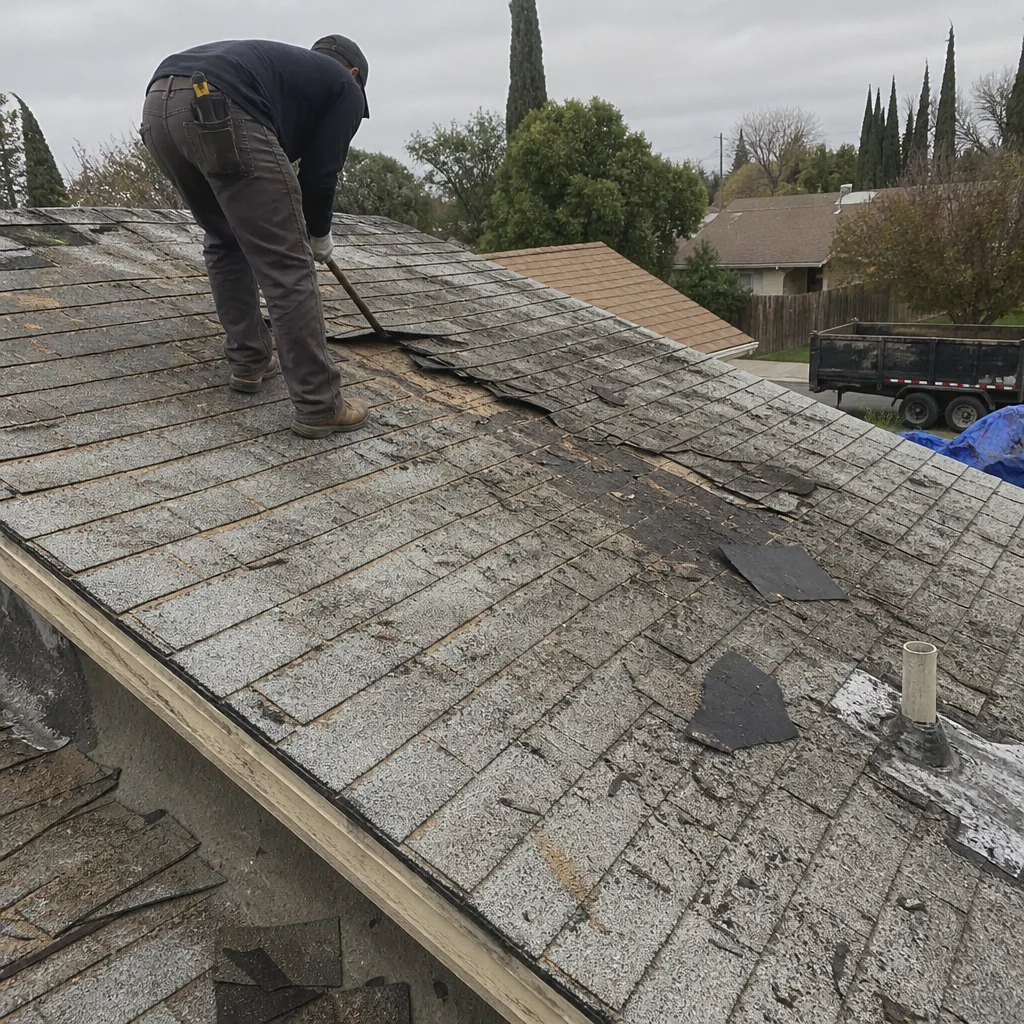 Before
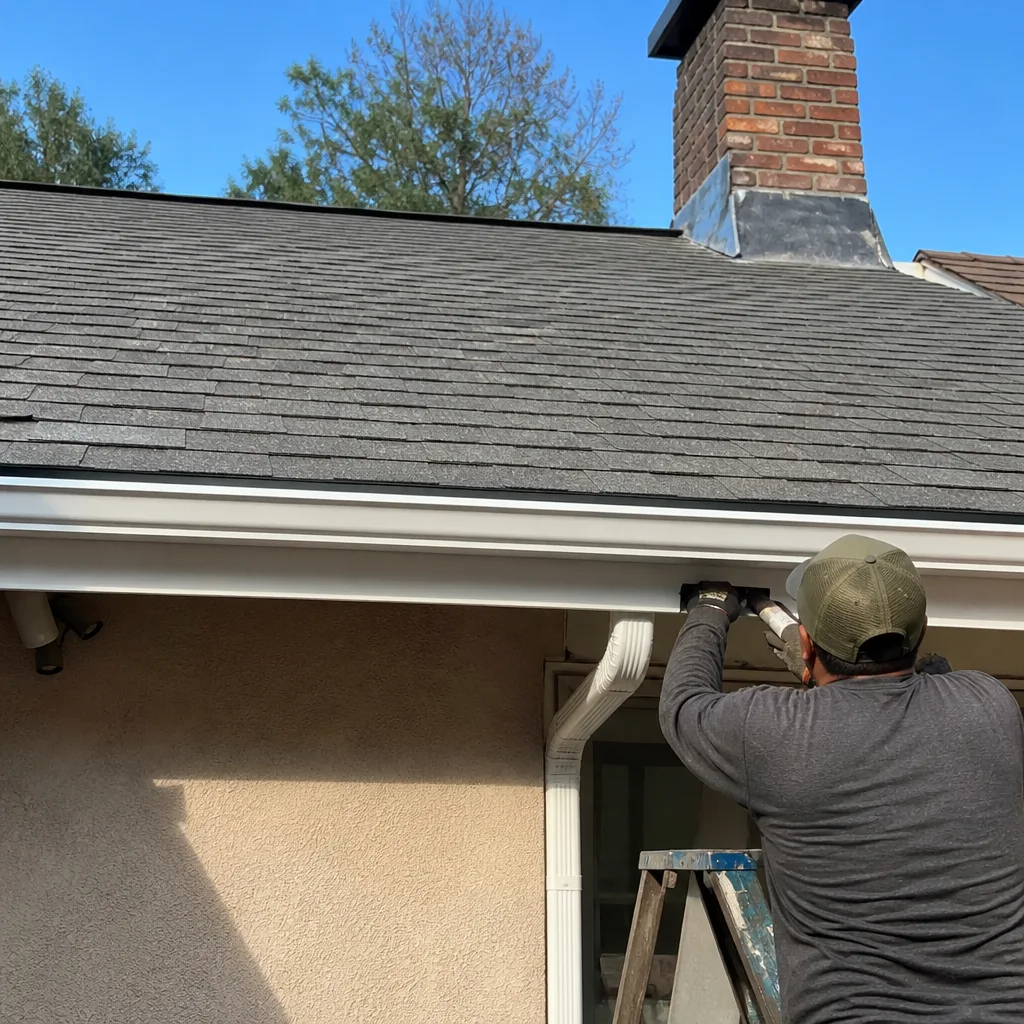 After
After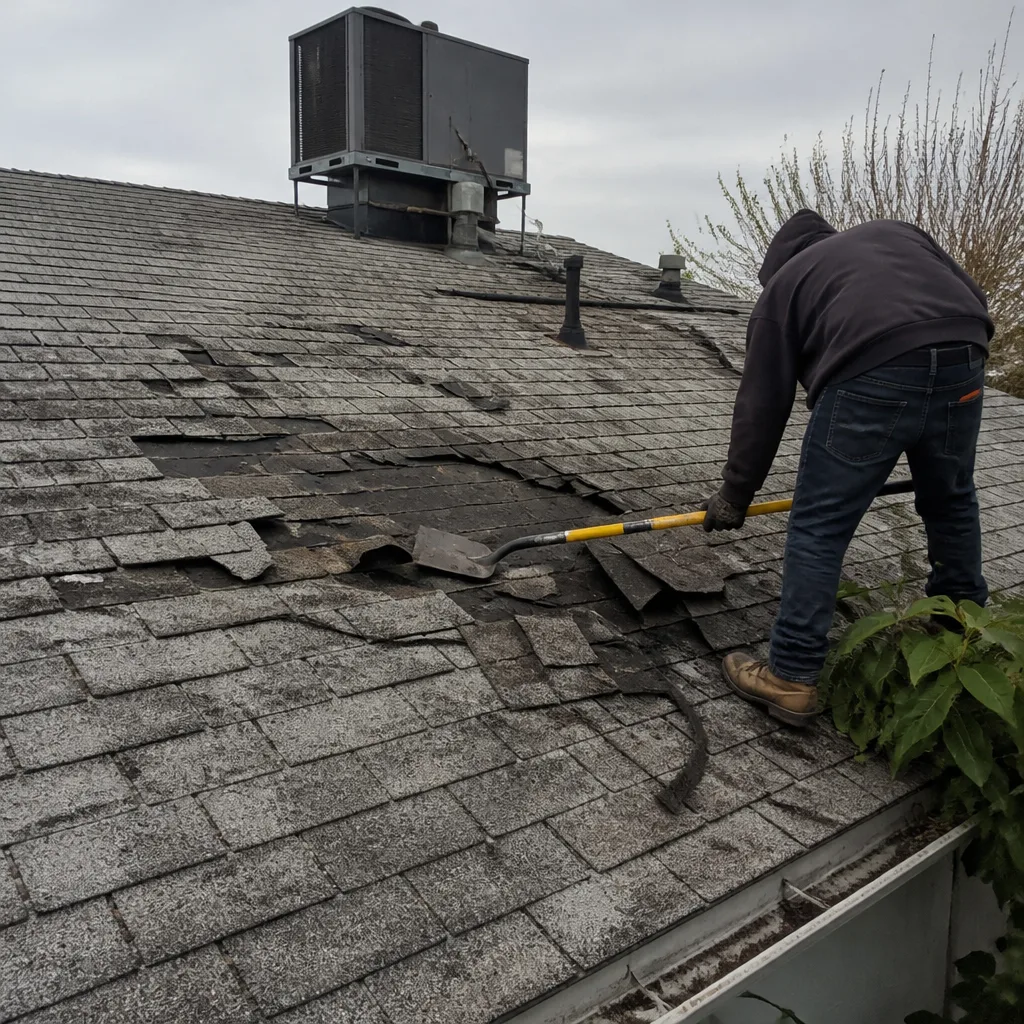 Before
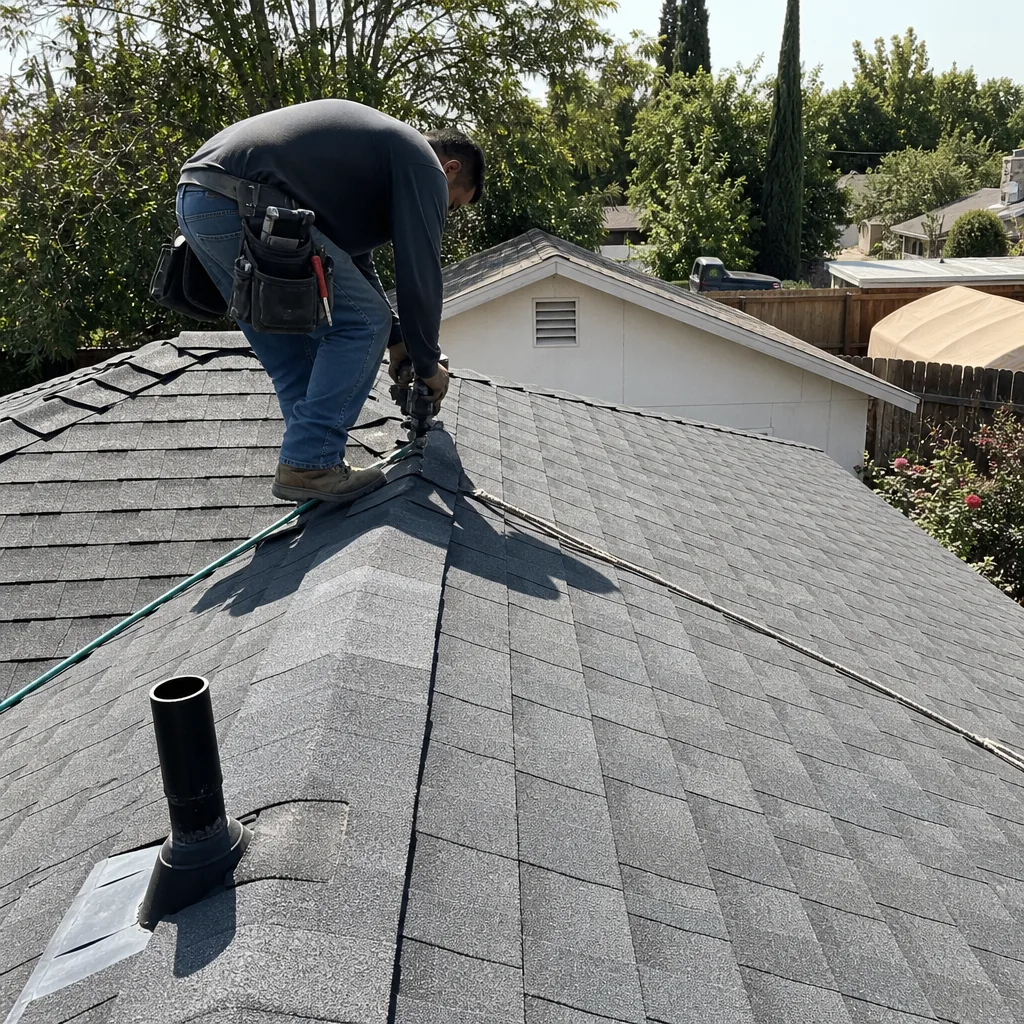 After
After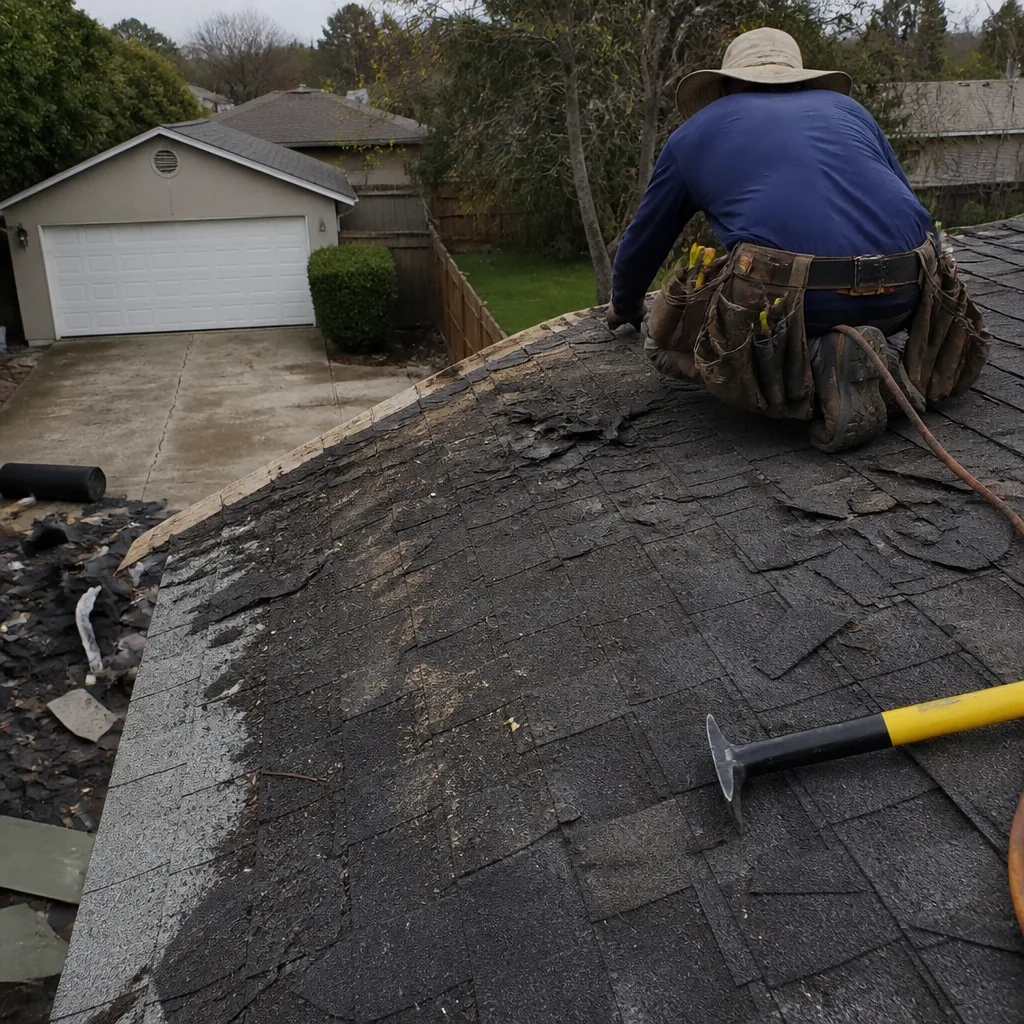 Before
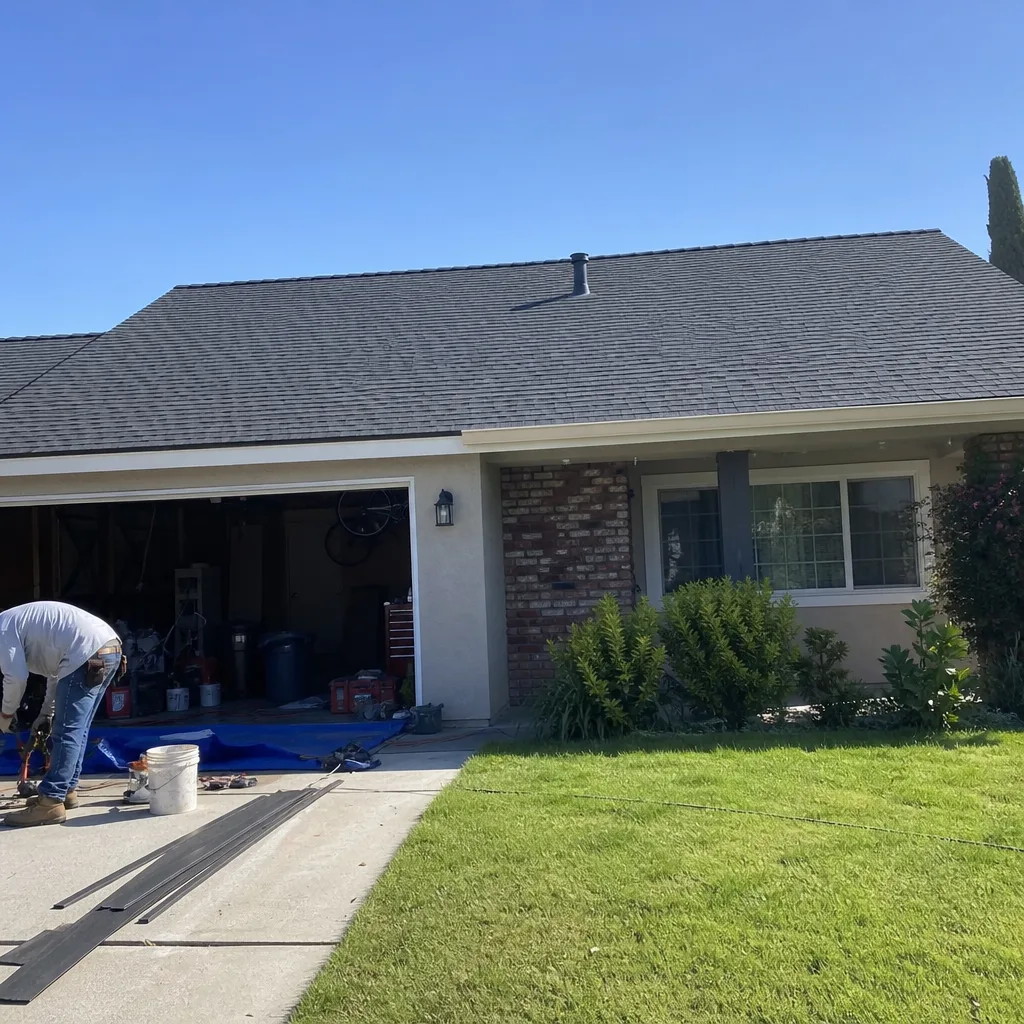 After
After